Email: rachelkramerbussel at gmail.com


Lusty Lady

BLOG OF RACHEL KRAMER BUSSEL
Watch my first and favorite book trailer for Spanked: Red-Cheeked Erotica. Get Spanked in print and ebook

Tuesday, November 19, 2019

New essay on bingo, debt, finances, freelancing and anxiety

I'm very happy that my essay on why spending $2,000 playing bingo was totally worth it is up now at The Goods in their Best Money I Ever Spent series. It covers my pretty much nonstop anxiety, debt, personal finance, freelance and how bingo plays a role in all of those.

Screen Shot 2019-11-19 at 8.17.51 AM

Firstly, I love The Goods and read it every day. Their reporting is super smart and interesting. Secondly, this series has been wonderful, whether it's about a US work visa, the TSA or a rose gold trash can or a vibrator. It's a delight because we all spend money, but we do so differently. I also wrote for The Goods earlier this year about bookstore crawls and Independent Bookstore Day.

I'm also honored that my essay got a custom illustration! Click here to see it. I think that's a career first. Yes, I know: Anyone who plays bingo will easily see that the numbers allocated under B-I-N-G-O are not all accurate to the game. But that's okay. If it gets people to read it, I'm all for it (I didn't see the illustration until the article when live this morning).

Labels: , , , , , , , , , , ,

Monday, January 14, 2019

My Washington Post article on couples and debt, and how I plan to pay mine off

In many ways, my new Washington Post article on couples and debt (which also got picked up by their women's publication The Lily and was reprinted at by the Los Angeles Times) was a challenging one. I first submitted an essay about my personal experience with debt and dating, and was asked to expand it into a reported article.

Screen Shot 2019-01-14 at 5.49.15 AM

That part was interesting as I got to talk to experts, including a three financial planners, a financial therapist and Bad with Money podcast host and author of the new book by the same name, Gaby Dunn. I've alluded to and once written about my debt before, but this piece had a higher profile, and I knew family members and friends would see it, and that was scary. I never want to look like a failure, even when I am. I'm not saying I consider everyone who has debt a failure, but for myself, I do, because the reason my debt is so high is my own doing.

I lived way beyond my means when I was in New York, and even though I haven't lived there for almost six years, the effects linger. Only in the last few years has my business grown in a way that paying it off is now in the foreseeable future. I had intended to have it paid off by the end of 2019 but had more expenses than expected, so that projected debt-free date is now the end of 2020. At the same time, in growing my business, I do need to stick to the "you have to spend money to make money" adage. So I'm doing things like attending creative business conference Alt Summit in March in Palm Springs (called Alt Oasis this year because it's six days long), considering hiring a publicist for my December Best Women's Erotica of the Year book launch and will be investing a lot of time into launching my online classes, hopefully by mid-March. Those things are all important to me for various reasons that essentially boil down to not wanting to do the same thing over and over and expect things to change. Having the classes will also help me pitch myself as a speaker...to places like Alt Summit. I meant to apply this year and a combination of stress and anxiety and negative self-talk prevented me, but I plan to launch a class on the subject I want to teach on, which will make applying easier.

The only way I will reach the next level in any area of my business is to experiment and try new things. I can't travel as much as I used to, and even if I could, in-person erotica writing classes, which I love teaching, can only reach 20-30 people at a time. My online class will be able to reach an infinite number of students all over the world. When I taught in Berlin last year, I had someone in another part of Germany ask if I was teaching there. Soon I'll be able to say yes to that. I'm looking forward to it, but it's also a commitment of time and energy (the costs so far have involved buying a microphone, which I did in...2017).

My point is, I'm doing a lot on the debt reduction front, and will be writing much more this year about debt and money, probably on Medium. But since I've lived with some for of debt my entire adult life, I've also adapted. I don't buy myself too many things these days, but when I turn in an anthology manuscript, I treat myself to buying a book, provided my local library doesn't carry it. I occasionally buy myself a Leota dress, although now I have a whole row of them in my closet, and got gorgeous ones for my birthday and the holidays. I've cut back immensely because what I want more than anything is to see a zero balance everywhere. I won't be going to New York too often. But I will make sure when I'm there I see one of my best friend's newborn twins, even if an extra day means paying for food and subway fare. I also need to have a life, especially to counteract the times when I work really insane, stressful hours, as I've done a few times over the last few months. I'm trying to move away from those but sometimes as a freelancer last-minute assignments happen, or I get sick and can't work as efficiently as I wanted to.

The truth is, part of me still thinks, Well, if you onlypay bills and necessities, you could pay off all your debt this year. I'd have to crunch a lot of numbers to see if that's strictly true. I could certainly come very close. But aside from the many business expenses I pay, from postage to buying books to send to authors to smaller things like renewing Flickr (yes, that's what I still use to post images on this here blog), I wouldn't be able to take my mom to Tribeca Film Festival as I did last year for her birthday. I wouldn't get to visit my family on Martha's Vineyard in the summer. I think the difference between me now and me back when I was accruing tons of debt is that I value every dollar I spend and consider it carefully. On our drive down to Virginia in December, I was proud of myself for forgoing my daily cup of decaf coffee and saving the approximately $2 it would have cost, because the craving wasn't that bad. But on the way back, I had a cup, because I knew I'd have a headache otherwise. What I most look forward to about debt-free life is not having to do all those calculations. In the meantime, my other way of tackling debt is, hopefully, upping my company's income by 20% this year. If I can do that, I'll likely have a lot more bylines and be able to look back at my 2019 work with pride.

Labels: , , , , , , , , ,

Monday, April 16, 2018

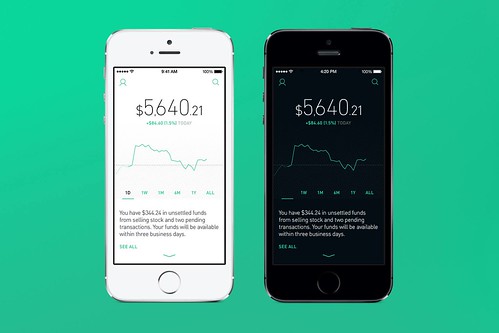
Want a free share of stock? Join me on Robinhood

Since I turned 40 in 2015, I've been thinking about retirement and investing and basically trying to get my money in order like an adult. That includes everything from not taking non-paying and low-paying writing gigs to ramping up my erotica writing consulting service and soon-to-launch Teachable online writing classes.

The other component of getting my finances in order the way I imagine everyone else did in their twenties is investing in the stock market. I also have retirement savings but I want to both supplement that and make sure I'm maximizing every opportunity for savings. To that end, I joined the Robinhood app so I can quickly, easily and cheaply buy stocks, especially in small amounts to start out. If you join Robinhood via my link, you'll get a free share of a random stock of their choice, and so will I. So far, I've gotten six free shares, which make up over half my very small portfolio: three shares of Sprint, two shares of Groupon and one share of Zynga. Yes, you get those totally free, I assume because Robinhood wants people to start using the app to see how simple it is.

I'm a complete novice when it comes to investing but I'm studying as much as I can and researching the companies I care about and use, like Stitchfix (that link is also an affiliate link). On the Stitchfix front, I recommend listening to this NPR podcast interview with CEO and founder Katrina Lake. All my favorite clothes of the last year have come from Stitchfix, and I've discovered fashion brands I now adore, like Leota. I'll be blogging more about my favorite Stitchfix looks soon.

So I'm not going to give you any advice because there are umpteen financial advice blogs and websites out there. Good luck playing the market if you do try Robinhood!

robinhoodapp

Labels: , , , , , , , ,

Tuesday, July 25, 2017

Why Tuesday is my favorite day of the week

Today is Tuesday, which to me is my favorite day of the weekend, although I love weekends too, because it's payday. Since starting my part time copywriting job last June, which I go to three days a week, I've welcomed the change of going from chasing down checks that may or may not arrive on time to doing that but also getting paid every single week for the work I've done the week prior. I'd bet money (ha!) that having a steady paycheck has contributed greatly to my mental health, because I know that as long as I show up to work, I'll have that check, and can better plan when I will pay rent and bills.

From what I can tell so far this year, my book royalties will be the biggest source of my gross income, with my copywriting job the second, but the big difference is my royalties arrive four times a year and are utterly unpredictable. They've ranged from the very low thousands to over $17,000 and I have no way of predicting quarter to quarter what they will be, so I can't rely on them. That being said, I should receive my royalty statement for Q1 2017 next week and I already have a list of what I will pay for with it, including some to my retirement fund, some to debt, some to key purchases and some investing back into my biggest literary moneymaker, the Best Women's Erotica of the Year series.

This year, as I've become fanatical about bookkeeping and started truly analyzing the cost of each dollar I earn, I've realized how wasteful I was of both my time and money in my younger days. Projects like interviews for Gothamist, some of which I am still inordinately proud of, didn't pay. Others, like In The Flesh Reading Series, sometimes broke even and sometimes didn't. A wiser person would have parlayed that reading series into a book deal and/or a sponsorship. I didn't, which contributed to its demise when I felt like I was taking advantage of myself. I sometimes wonder, what could I have done with all that creative organizing energy that would have been sustainable in the long term? I don't think of it in a regretful way but more in a how can I apply this to my work life now? way.

This month I've been busy with promoting my latest Cleis Press anthology, On Fire: Erotic Romance Stories, finalizing the table of contents for the self-published rerelease of Sex and Candy and some freelance writing, and starting next week/month, I will be planning the first of many online courses I plan to teach, organized around my consulting and teaching site, EroticaWriting101. All of those projects and whatever happens after them are part of my strategy to stay relevant in the job market. I'll also be making a copywriting portfolio page and learning more about SEO and Amazon keywords. It's a lot to juggle, but I feel good about taking a proactive stance. I'm writing an essay about how I'm paying off a large amount of debt and while I'm not proud of having the debt I'm excited that I can see the light at the end of that damning tunnel and eager to get started on projects that have the potential to yield income for many years to come. Still, as long as they will have me, I'm grateful for my job, which is teaching me a whole new world and style of writing and outlook on the world, and giving me that Tuesday morning payday to look forward to. I am ready to make new mistakes (because I'm sure I will), but at least I won't be sitting around waiting for things like I did in my twenties and thirties, when I never asked for a better job title or advocated for a raise or anything else that would advance my earning potential. Now I realize that I have the power to at least try new endeavors, measure their success and go from there.

Labels: , , , , , , , ,

Wednesday, December 23, 2015

4 things this editor gives my anthology contributors in addition to paying them money

I am gearing up for the release of Best Women's Erotica of the Year, Volume 1, which hits bookstores and e-readers January 12th, and also to post the my new call for submissions for Cleis Press for Best Women's Erotica of the Year, Volume 2, which you can find on January 1 at bweoftheyear.com. The payment for authors for that volume, will be, as this one was, $100 per story. It's a fee I hope to be able to increase if I am given the opportunity to edit future volumes; I have no idea if that will happen, and right now my focus is on making the first volume as big a seller as I possibly can.

BWEOfThe Year_approved

Already, I can tell you that I've gotten the woman I consider the very best erotica narrator around, who also happens to be a contributor to the book, Rose Caraway, as the narrator of the upcoming audiobook. That's one way I'm expanding the reach of this volume and ensuring that it reaches a wide readership/listenership.

Because I know that for most of us, that is a small sum in the grand scheme of bills to pay, I want to talk a little bit about what else I try to provide my authors. As a full-time freelance writer/editor/teacher/consultant, I know very well the value of money. I don't get paid sick days or holidays. I only get paid for work I produce, and that means that I'm highly aware of the value of every penny I spend and every penny I make. It's why I plan to tell those authors whose work is accepted this year to not waste their precious dollars sending their contracts via priority mail, when cheaper, regular old mail will do perfectly and won't cut into their $100 fee.

So because I'm aware that $100 isn't that much money, here's some of the other ways I try to support my authors:

1. Social media - I've made a Twitter list of the contributors to Best Women's Erotica of the Year, Volume 1 and am doing my best to promote them, retweet them, and share their additional news, such as free erotica stories.

2. Interviews - I try to give authors a way to promote their own work and to highlight the efforts they've put into crafting their stories in my books. In the case of this book, I'm doing a series of Q&As on Tumblr with my authors. So far, I've interviewed: Elizabeth Coldwell, Rose P. Lethe, Valerie Alexander and Theda Hudson.

3. Reviews - The moment I see one of my authors praised in a review of the book they're published in, I let them know. I also post those wonderful words highlighting their stories on social media, as I did with the recent Library Journal review. I want them to hear what people have to say about their work; of course, if a review pans my author, I won't go out of my way to point that out to them, but an up-and-coming author can use some of those reviews in their own promotional materials, to bolster a book proposal or simply to quote on their website.

4. Live events - Plug: come hear me read from Best Women's Erotica of the Year, Volume 1 at these free events: January 19th, 6:30-8:30 pm at Good Vibrations, 1620 Polk Street, San Francisco, with Amy Butcher, Rose Caraway, Dorothy Freed and Jade A. Waters, and March 31st at The Pleasure Chest, 3436 N. Lincoln Avenue, Chicago, from 6-7:30 pm with Tara Betts and Rose P. Lethe.

This is probably the most costly and time-consuming aspect of anthology editing. On one level, you could see it as me asking authors to provide free labor, because essentially, I am. I'm asking them to take time out of their day or night and read their story to a live audience. But why I think this is helpful to them is: a) they get to bond with audience members and grow their own fan base, b) they get to hear their work read aloud and find out how people respond to it in the flesh, c) they get to meet fellow contributors in person and b) returning to social media, I promote their name and, if they are amenable, their photo on social media. Their name may get mentioned in major media outlets that are listing the event. I firmly believe that live readings go a lot further than the limited number of people who will actually attend such an event. Simply getting your event "out there" means you're raising awareness of the existence of the book and those authors' work in the book.

Is there more I can do for my authors? Most likely, yes! I am in ongoing communication with them and open to suggestions, and hope to add new readings to the lineup in 2016. I want my contributors to feel proud of not just their bylines, but being part of this book as a whole. I want to give them as much support as I'm capable of given my time and resources. And as I said, my goal is to make this book and the next one sell far beyond my wildest dreams, which will enable me to do more promotions, more readers, and pay future authors even more money. For now, this is what I can offer, and I look forward to launching this book and reading submissions for the next one in the new year.

Labels: , , , , , , , , ,

Wednesday, September 30, 2015

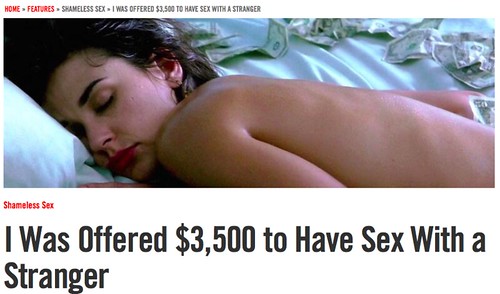
A stranger wanted to pay me $3,500 to sleep with him - you won't believe what happened next

I learned a lot about myself, sex work, money, labor and value while writing my latest DAME column, "I Was Offered $3,500 to Have Sex with a Stranger. Thanks to Melissa Petro and Kimberlee Cline for sharing their thoughts for the column. Check it out now, and I welcome suggestions on future topics to cover at rachelcitypaper at gmail.com - you can also read my entire DAME Shameless Sex column archives.

damesexformoney

Labels: , , , , , , , , , ,

Friday, July 10, 2015

Why my dad isn't my financial role model

I wrote my first piece for DailyWorth, an essay titled "I Learned How NOT to Handle Money From My Dad." It's a pretty personal piece, but one I felt was important for me to write as part of my journey in figuring out my money. I'm usually not one to read comments, especially when I'm being vulnerable with my writing, but the comments so far over there have been very interesting and prove my theory that when you share from an intimate, personal place, others will too. Here's the beginning:
For my bat mitzvah, my dad gave me a check for a thousand dollars, a gigantic sum for a suburban teen in the ’80s. It was extravagant, and I was appropriately giddy, plotting exactly what I would use it for. Until it bounced.

That’s one of many examples of the ways my father, while offering me unconditional love, failed me as a financial role model.
Read the whole thing

Labels: , , , , , , , , , ,

Wednesday, August 06, 2014

Money, Guilt, Freelancing and Feminism

All of those topics are wrapped into my new DAME essay, "I Feel Guilty for Not Being the Breadwinner." Freelancing is key here, because a) I never know exactly how much I will earn in a given week/month/year ahead of time and b) don't know when I will receive payment for what I've earned. This makes it very challenging to budget and plan. So it's not so much that I don't make enough money to pay my bills (at least, while the erotica book market is in my favor), it's that that money doesn't always arrive in a timely fashion. I've had weird things lately where places that usually pay me one way suddenly paid in another way, or checks sent to old addresses, or delays, and all of it makes me feel guilty and uncertain. Read more at DAME, where I've got another one coming up related to sex.

men-women-breadwinner_0

Labels: , , , , , , , , , ,

Sunday, February 02, 2014

5 reasons I'm excited to do the 21 Day Financial Fast

Due to my new non-book-income life, I am scrambling to continue my freelance work, find a part-time or full-time job and save money/spend less. In the long term, I hope that will involve moving away from my cool but expensive town to somewhere where we can instantly cut our rent and living costs by half, but that will have to wait until next year. For now, I need to reorient myself to the fact that the book income I'd come to rely on is gone. So that's why I was excited to read about Michelle Singletary's 21 Day Financial Fast. I plan to do it from February 6-27. I would start sooner but I agreed to go into New York ($29.50 right there, plus $5 in subway costs) on Tuesday to be interviewed for a podcast. Whether that's a smart business decision or yet another wasteful one, I am not going to think about right now. Instead, here are 10 reasons I'm excited to do this fast:

1. My bank account will stay the same or go up - I check my online statement daily to make sure there's been no fraud and keep track of my spending. I find I've often forgotten I spent money, whether online or in stores. Maybe it's a few dollars at the delicious new French bakery or $25 at Rite Aid or buying new pens at Staples. When I'm in New York, it's often food. Sometimes it's impulse splurges at Amazon. So the idea that my account will either remain the same, or go up (I get a few payments for work via direct deposit) is exciting. It will help me budget better so I know that any money coming in will be money that I have available to me.

2. I will save time by not looking to buy things. Maybe I'll browse, but in general I only shop or browse when I plan to buy something. So the time I might have spent doing that I can devote to finding work and completing assignments.

3. It makes saying no so much easier. Forcing myself not to spend money means saying no to things like trivia, which I was planning to attend on Tuesday, easier. I've already cut back almost entirely on going out, and had decided for 2014 that I would only allow myself trips into New York for work or travel purposes, but this makes it even easier. There are some things that are prepaid, like my Playwrights Horizons tickets, so I am going to figure out how to maximize a single day trip when I do go see Sarah Ruhl's Stage Kiss, the entire reason I joined.

4. An all or nothing plan for an all or nothing girl. I suck at moderation. The very idea just triggers something in me that wants to rebel. I'm good at excess or abstinence, in almost every situation where one can make those choices. So the absoluteness of a fast makes sense to my mind.

5. The satisfaction of knowing I could do it. I will at some point have to pay bills and chip in for groceries and other basics, but I'm trying to wean myself off the toxic cycle of waiting "until the next royalty check," because as I just learned, there's nothing to expect. Those days were fun and a thrill and a blessing, but they are over. So now it's time to push myself to pursue every pitch, every lead, every possibility, while also digging up interview clothes (I'm pretty sure I tossed all my suits when I moved, if they weren't gone already) and refashioning my life. I want to prove to myself I can do it. One of the biggest blows has been the change in where I thought my year was going. I had been hoping to visit one of my oldest friends in Seoul. I'd been hoping to maybe try to get pregnant. I can't/won't do those things without money, which right now is all going toward basic bills, with a lot of math to make it all work out on time, but this also means that I have to clarify my goals. If I still want to try to make those things happen, it can't be about the short term, but the long term. I don't have the cash to put in the envelope I was planning to mark "Seoul" but I can do my best to be in a position to start that savings when the funds do become available, which could be in 3 months or 6 months or 3 years. Do I want to blow $29.50 on yet another trip to New York for no good reason? No. I'd rather save that for traveling somewhere I've never been before, or use it to pay off debts. While it's great to live somewhere "close to New York," there's little value in living somewhere "cool" if you can't afford to go anywhere, or if all you do is stay home and watch TV. I'm more convinced than ever that next year will be an opportunity to find the best home possible for the best value. Some of that is not my decision to make, but in the next year I plan to research the cities I want to live in and see how they might be feasible.

Bonus: taking an extreme but pro-active step like this makes me feel like I'm part of the solution, not part of the problem. It's easy for me to have a million regrets--why did I move to a pricey town and apartment? Why did I travel to all those conferences last year instead of staying home and writing? Why did I buy X or Y? But that kind of thinking will get me absolutely nowhere unless I use it to power my present decisions. After the fast, I will have to figure out how to allocate the money that is coming in in a responsible way. I have a lot of fuckups and regrets, not just in the last year, though some of those are front and center before me at this time of year, but only by not repeating those mistakes can I move into a better future. I will admit that I had a good cry when I opened that sad royalty statement, because though I thought I'd prepared myself for the "worst," I hadn't even begun to conceptualize what the worst could be. As I've learned from a life of epic mistake after epic mistake, though, so often the worst case scenario is actually a blessing in disguise, because you no longer fear rock bottom, because you've lived it. That fear that was occupying an increasing amount of brain space vanishes and you simply live in the here and now and revise and readjust and start over.

Does it suck to work hard on products that don't sell? Of course. But don't tons of businesses fail every day? And I'm pretty sure the smart businesspeople don't crawl into a hole and admit defeat. They cut their losses, and find new products to sell. Or they find a new career. I'm trying to do both. I cried because I thought I was my product. I put too many of my literary eggs in one basket. Now I'm accepting that it's the end of an era and moving on. I'm going to become financially self-sufficient without the books, but also without thinking they are worthless nothings. I put time into them and cared about them and did my best. They are what they are, whether anyone buys them or not. If they wind up bringing me some income in the future, great. If, as is much more likely, they don't, that just means their time has come and gone and my true job as a writer/editor lies elsewhere. Regrets are easy, but accepting the things I cannot change is harder yet smarter. That's who I want to be in 2014: someone who works harder and smarter, not someone who simply gives up. I've been the latter so often that it became ingrained in me that that's who I am: the girl who gives up. Already, before I've ever started this Financial Fast, I know that by committing to it, I'm committing to not giving up. And that is truly priceless.

Labels: ,

Friday, August 30, 2013

How writing for free can lead to paying writing work
I used Grammarly to grammar check this post, because despite my horror when I see discreet and discrete mixed up, I have my own grammar bugaboos.*

Let me start by saying that this is a complicated topic, and I don't have all the answers. There are many factors that go into deciding whether to write for free, how much to charge, what your minimum fees are, etc. What I want to do with this post is offer a few examples of how writing for free led me to paying writing jobs. That being said, I believe everyone should be paid for their work, and don't think you should aim to write for free. You should aim as high as you can, and equal pay for equal work isn't just about gender equality, but about knowing, owning and demanding your worth. That being said, if working unpaid can lead to bigger and better things that you might not have access to otherwise, it can be worthwhile, in my experience (and of course I'm only writing from my own very limited experience here).
My aim here isn't to debate the finer points of what writers should get paid; you can get fascinating insights into that at The Awl in "How Much Should A Writer Get Paid? A Conversation", and Noah Davis breaks down his freelancing assignment rates by the numbers.

Ann Friedman offers up some excellent reasons to write for free, based on her work experience. Of her pie charts for The Hairpin, she writes: "After I published a few and people seemed to like them, I made it a goal to find a publication to pay me for similar work. "

I also can't recommend enough Virginia Sole-Smith's writing about freelancing, especially "On Getting Paid (And Knowing Your Worth)" (her math on figuring out how valuable your time is was a whole new way of looking at the topic for me) and "Why Creative Word Fairies Need Business Plans, Too".

In my case, I'd written a few pieces for Nicole Cliffe when she was at The Hairpin, for free. Why? Well, I'd pitched my review of The Feminist Porn Book to a few sites that passed, and wanted it to be read, ideally by readers who'd be interested in the topic, plus I wanted it to be timely. I didn't want the work I'd put into the review to go to waste, and I wanted to join the conversation about the book. I also did an interview with former Westboro Baptist Church member Lauren Drain about her memoir, Banished, for similar reasons. When it was announced that Nicole was leaving The Hairpin to launch The Toast, I queried her, and so far have written "Sympathy for E.L. James" and "Hoarding Isn't Fashionable or Glamorous." Both pieces are paid. I couldn't have known that would happen at the time, but it was fortuitous.

I got invited to write for Medium.com in May, and was interested because I'd read about the site on Gawker, and was avidly reading all sorts of essays about a variety of topics. Most were tech-related, but there was also a great column by bakery owner Allison Robicelli, about everything from appearing on Chopped to her letter to a first-time father.

Even though I wasn't being paid, I agonized and agonized over what my first post should be; I even decided I'd try to go all out and push myself to write an essay a day. That so didn't happen, despite my handy chart of what I planned to write about. Maybe someday it will. But when James Gandolfini died, I hammered out my first post for them: "James Gandolfini Was My Celebrity Crush." I worked all morning on it, then hit publish, and went to lunch. I didn't get paid, but you know what? I felt great, for having written it. For not having thought about it for weeks or months until my ideas turned to mush in my head. Salon reprinted it. I didn't get paid for those, but it was okay, because I had contributed something I thought was important, and perhaps brought in new readers in the process. One thing I especially like about Medium, as a reader and writer, is that your profile is linked to your Twitter account (you must have a Twitter account to post on Medium), so it's very easy to start following writers you like. I've found some amazing writers that way. You can also view your statistics, and I'm trying to use this information to help me figure out what works and what doesn't in terms of drawing readers, which I plan to use when formulating pitches for other publications. For me, since much of the focus of the writing is tech-oriented, I have a feeling I'm reaching readers I wouldn't normally reach, which to my mind is always a good thing.

When I was asked to contribute to the Boinkology collection at Medium, I was honored, but I said I'd only do it if I was paid. This was different to me than the Gandolfini piece, because this is my area of expertise, the topic I write most about, and I'd probably be writing things I'd likely sell elsewhere if I didn't write about them for Medium. Based on the Gandolfini piece, someone who I don't think would've known my work previously, knew who I was and agreed. So far I've written "Wikipedia Thinks I’m a Lesbian — And This Bisexual Is Okay With That" and "I Don’t Want or Need an App to Measure My Sex Life" and "5 Ways to Use Technology to Write Erotica". One thing browsing Medium, including their monthly top posts(right now "Why I Quit CrossFit" was the most popular in July), has shown me, is the power of a headline. Think about your title standing alone on Twitter as a link. Then, it won't be your name or your writing or wittiness selling it, it'll be your title. That has helped me crystallize exactly what I'm trying to say, hopefully in a snappy way.

Here's where it gets a little woo-woo: you never know who is going to read your work, and where that might lead. Ann Friedman says she plays a long game. As someone who is both trying to sell freelance articles and promote my anthologies and, hopefully, someday, my own authored books, I know that there may be readers who've never heard of my erotica, or never thought about reading erotica, but might think, Hmmm....Baby Got Back. That's funny. Maybe I'll check that out. That's why I have stories posted for free on my website and Goodreads. I got paid to write them, but am now giving them away, in the name of building up a readership. And I think that figuring out what your end goals are is important. I don't have that aspect totally down pat, but I know that I have books coming out well into 2014, so I try to keep up with what's happening in the fields I write about, but also broaden my reach to readers who may never browse the erotica section but might want to check something out based on reading either my nonfiction or fiction. You never know who might see a post and, whether that day or down the road, recommend you or your books to someone else. That's the part that you can't control, and may never even know whether or how someone came to notice you, but for me, it's worth taking the chance. My royalty checks are what pay my rent (with a bump from freelancing), so if I write something for free but enough people see it and buy a few books, that helps.

Right now I'm working to get my career in alignment, so the things I want to write about are also the things I get paid for. I spend a lot of time pitching, and sometimes that feels like "wasted" time, in the sense that I tend to agonize over it and do a ton of research and most often it doesn't yield an assignment. Those pitches aren't paid, but the hope is that by honing my pitches, reading the publications I want to write for diligently, broadening my scope and keeping pitching, it will pay off. I'm not looking for more opportunities to write for free, but rather, more opportunities to expand my reach and try to make freelancing a sustainable career option for me. I almost didn't write this post because I feared that saying I sometimes write for free would give me less bargaining power when I do pitch publications I want to write for. But again, you need to know your own rock-bottom needs and criteria for writing for free or for pay.

A tangential but semi-related topic is that sometimes, for me, it's been worth it to pay money to get a byline. Not buying the byline, but spending money to attend an event or purchase a product so that I could write about it. I paid $129.12 (according to my PayPal record) to attend the E.L. James luncheon by Divalysscious Moms that helped me break into the New York Observer. Not only did attending this event give me insights I wouldn't have had otherwise into the Fifty Shades fandom phenomenon, but also this led directly to me covering a Koch protest in the Hamptons for them. I will also share something that is a huge no-no that I did, a mistake I hope you will never make: I never turned in my receipts to get reimbursed. I saved them, and meant to send them, and then...didn't. Oops. I've done that multiple times, and I have no excuse, but that's a surefire route to making your expenditures not worth it. Keep track of everything, and if your publication is reimbursing you, turn in your receipts right away. Even if they're not, save them for when you do your taxes. I'm attending another event soon that I paid for, in the hopes of covering it for a venue I haven't written for yet, and if that gambit succeeds, it will have been worth it (and if not, it will be an interesting life experience).

Ultimately, I agree with Slate's Matthew Yglesias (see also: his first post on writing for free):
The fact remains that if you have things to say that you think are worthwhile and nobody is offering to pay you to say them, you ought to say them anyway for free. If enough people agree with you that those things are worthwhile, it just may lead to something.
I write for free when the pros outweigh the cons, or I've simply run out of time or patience pitching a piece and would rather get it up, anywhere, than have it live on my computer with only me reading it. Or sometimes, I want a piece to fit in well with like-minded pieces. I weigh the venue and the effort involved and how important it is to me to give the piece a home, and what the possible gains might be. I've written plenty of pieces that never went anywhere because I couldn't sell them, and as I move into my third year of freelancing, I'm doing my best to make sure that doesn't happen, or else take it as a sign, to pitch better and smarter (which is why I very well may retake Anne Trubek's excellent How to Pitch and Submit class, which I highly recommend).

' Lately, I've been riddled with fear, anxiety, writer's block, self-hatred...I could go on, but the point is, I have barely been able to write lately, whether I'm being paid or not. I'm working on conquering those fears, which circle like vultures, zooming in on my weakest spots. In the meantime, any writing is useful to me, because it shows me I can do it, which is another piece of the puzzle, because first i have to believe in myself and prove myself, before I can expect anyone else to. Publishing the pieces I've linked to above for free shows me not every piece has to be perfect (according to me) to be valid, to be done, to be able to turn it in and move on to the next one, and the next, and the next.

* To wrap this all up and comply with the FTC, this post is sponsored by Grammarly, but I was planning to write it anyway.

Labels: , , , , , , , , ,

Sunday, October 16, 2011

5 Things I've Given Up Since Becoming Self-Employed

My next post will be about 5 things I've continued to invest in, that are worth it to me in this age of belt-tightening, but here are 5 things I've given up since becoming self-employed:

Therapy: One of the first people I contacted was my therapist, to cancel that week's upcoming appointment, and all subsequent ones. I was barely affording the out of pocket $150/week as it was, but I was loath to find someone in my insurance's network because I clicked with my therapist and had already shared and been through so much with her. The idea of starting over was daunting to the point of not being worth it. Funnily enough, I knew I'd be seeing family members and others I'd discussed in therapy for a while, and it felt like an opportunity to learn how to be a grownup, to learn how to handle possible adversity with grace, and I think I did, to the best of my abilities. It will take a little getting used to, and I in all likelihood will return when I am able, but I think I'm making pretty good strides on my own, which is an accomplishment for me in and of itself. This also means, unless I find I can't function without them, giving up the Ritalin I'd been using, since I can't afford another pricey doctor visit. It's possible I could find someone using whatever insurance I now have, but I am terrible with all forms of paperwork and don't think I'd have the time or energy at the moment to wade through that. I still have some Wellbutrin left and am hoping it's not a giant hassle to get more. If it is, I would consider springing for a doctor visit since I do need that to keep me earning money by writing and editing and generally getting out of bed.

Personal training: I had a few more training sessions left that I'd purchased from New York Sports Club, with a trainer I've enjoyed but I wasn't sure I'd continue with anyway. I've found that for me, measuring my BMI only leads me to either become obsessive and depressed about its numbers, neither of which help encourage me in a healthy way to eat more wholesomely or exercise further. I simply cannot afford the indulgence of pricey training, though I am thinking of looking into working out in a park with some friends who recommend the classes there. I do like the individual attention, but have found an inner resource of discipline I didn't have before, and have been running more consistently, in part to get my money's worth out of my gym membership, and in part to relieve stress and tension.

Travel (mostly): I love traveling; it's what keeps me sane when NYC gets to be too much for me, which is all the time, and gives me a chance to see old friends, make new ones, discover deliciousness like Sweet Iron Waffles in Seattle, and contemplate whether I could actually live in whatever city I'm visiting. I find that I see more art and explore more and just look around in a different way when I'm out of my home environment. I would still like to go to Iceland and Korea in 2012, in addition to our Cupcake Cruise to Bermuda, but for now those plans are on hold. I already have a ticket to Scottsdale for two weeks from now, and I'm hoping to still go to Portland, Maine, since it's cheap and I could use a little escape, and my uncle may get me a ticket to LA for Thanksgiving, but other than that, I'm using this extended time at home to work on clearing out my home. Perhaps if it was more livable of a space I wouldn't feel the desire to travel so much; or maybe it'll be a way to incorporate writing into my traveling and find a way to sell stories and thus support my travel habit. I'm not ruling out travel entirely but I feel extremely foolish for having, say, gone to London this year and wasted oodles of money, supposedly in the name of readings but I handled that extremely poorly. I know I cannot afford to fly anywhere just for readings or book events, because my money would be much, much better spent on promotions that reach more people. I will have to see if I can afford to visit the Bay Area as I'd planned in the spring to meet with my publishers in person and do some events, but it will have to be much more considered than my previous wasteful, haphazard arrangements.

Theater: Save for a ticket I had already bought, I'm forgoing the membership I was going to buy to The Rattlestick (mainly because I want to see Jesse Eisenberg's Asuncion, but also because I like being exposed to things I wouldn't otherwise see because I've committed to them, even when it turns out, like at Second Stage this last season, I'm not overly impressed). I do still want to continue trying to go to at least one theater show per month (hopefully going to The Lyons with my mom as a birthday present next month, but we're aiming for rush tickets), but I can't afford to pay more than $25/show. Hopefully if my finances improve this will change, as I've been lucky enough to see shows at Berkeley Rep, Seattle Rep, ACT, Rattlestick, The Public Theater, Second Stage (both theaters) and perhaps somewhere I'm forgetting this year. I love that New York has so much free and cheap comedy and other entertainment

Birth control: I know this is a hot topic this week, and will probably address is separately, but my new financial circumstances solidified my decision to forgo wasting $50/month on birth control. Why "wasting?" Well, on the rare occasion I might be having possibly procreative sex these days, I plan to use condoms. I had already decided to go off NuvaRing; my doctor said if I don't need the hormones, there's no point in adding them to my body. I did like the regulation of my period NuvaRing provided, and the added backup, and in the crazy wackadoo chance I wind up engaging in ongoing sexual activity where this might be an issue, I could conceivably (ha!) afford the $50 a month, but I'd really rather not. And while some argue that a manfriend should pay for birth control, I don't think I'd feel comfortable with that. Condoms, yes, but my birth control, not so much.

Labels: , , , ,

Wednesday, October 12, 2011

Why I Turned Down $3,000 To Be on a Reality TV Show

In August, I wrote about hoarding in a personal essay for Salon's Mortifying Disclosures section. I'd been debating between cyberstalking and hoarding as my most mortifying disclosures, and went with what I considered the mosre unusual and the more treacherous for me. I received mostly positive feedback to the piece, including some from people I greatly admire (no, I did not read the comments, but a friend read a few aloud to me, including the ones about, sadly and predictably, people who wanted to spank me).

I wound up going on a radio show based on that article and then I was contacted by a reality show, expressing interest in having me on as a guest. I was honored, and intrigued by the fact that I could've made a significant amount more than I was commissioned for the essay, not to mention received organizing services (something I've been paying for piecemeal when I can afford it) something that I think signifies a lot about our media consumption. I eagerly answered their questions, rounded up a friend who might appear to give an assessment, and started to think about what it might really be like to have my every stray pair of underwear, towering stack of books, sex toys, dust bunnies and whatever other detritus I own beamed into conceivably millions of homes.

I don't own a TV and watch very few shows. The ones I do watch are mainly via Netflix rentals, hotel visits, airplane rides and visits to friends. For me, being published at an esteemed site like Salon, which I've been reading for a very long time, was a huge honor. Being on TV would be exciting but also felt a little removed; since I don't watch TV, I have little sense of how many people do watch. It seemed to me like something that happens in some tucked-away corner of the world, even though that equation is actually hugely distorted. Sad as it is to admit, I know it's us readers who are in the minority.

Last year, I flew on my own dime to Los Angeles to appear as a judge on a cooking show. It was a little nervewracking but mostly excited, and it was over almost before it started. I didn't have to worry as much about "being myself" because all I was doing was smiling at the camera and tasting some mini cupcakes (although I did get one of my favorite pieces of hate mail ever calling me "piggish" for licking my fingers after I ate).

The irony of turning down this show about hoarding was that a little while later I found myself without the cushion of a full-time job. Would I have made a different decision if I'd known how that would turn out? I'm not sure. It's very tempting, because turning down money, wherever its source, feels like telling the universe I don't care about paying off my gigantic debts or any kind of financial security. It feels like hubris of the highest order; who am I to be picky, to write for a very small fraction of that fee, or, ahem, blog here for free, but turn down something lucrative?

Many friends and advisers had strong, anti-reality TV reactions. "You won't have any control," the said. "It's exploitative." "They can make you seem any way they want." All true, but those were not reasons that seemed convincing to me. Of course reality TV has an angle; don't we all? Yes, it's edited, but don't we all edit ourselves, presenting our best, or sometimes our worst, selves, or some part of a persona to person X, another part to person Y? That seems to me part of being human. I get that the difference is that when we do it, we are in control of what side of ourselves to show, while an editor can manipulate even the parts of you that you've chosen to present and twist the context. I still think that the risks would have been worth it, for me. Some people are extremely private about most aspects of their lives, but I'm not one of them. For me the catharsis of admitting my biggest flaws and then connecting with others who either share them, as happened with my hoarding essay, or have something useful to offer, outweighs the specter of judgment.

Ultimately, my reasoning was about a much more basic level of self-preservation. I didn't want to have to ask my landlord to sign a legal release that, despite seeming innocuous, was still something I'd have been hesitant to sign myself., and thereby reveal something that might jeopardize my housing. I don't have a Plan B about where to live, and because of my possessions, it would take a few months to even get everything boxed up, unless I were to toss it all in a dumpster.

But back to the legal form…There's something about saying "I promise not to ____" that makes even the least skeptical person, who had never even suspected ____ was possible, read a phrase like that and immediately think "I wonder if they will actually do ____ and if they do, what will happen." Despite having attended three years of law school, contracts make me nervous. The formality of their language is by its nature intimidating. It's not the way we naturally speak, and sometimes seems deliberately designed to obfuscate the truth, requiring a translation. Don't get me wrong; I sign contracts all the time, but I am aware of their limitations.

I'm not a fan of flowery, academic or overly wordy language. I've started reading books and put them down in part because they were over my head, and in part because I felt like they were trying to reach a limited audience simply by their highfalutin language. Me? My dream is to write a novel that is sold in airport bookstores. While much of what I write is also not going to appeal to the masses (bondage and spanking erotica, anyone?), the language itself is not trying to hide anything.

I don’t know what would have happened if I'd agreed to take part in the show, aside from having two months' worth of rent in my pocket and a cleaner home. Would I have gotten recognized on the street as "that girl with the messy apartment?" Would I have somehow placed myself out of another opportunity waiting in the wings? Would it have led to a memoir about being a (former) hoarder?

Soon after, I was approached by another show, this one a tattoo reality show. I had already decided to get a second tattoo sometime in November to celebrate my birthday, so I expressed interest. However, on this show, there not only isn't any payment, participants pay for their own tattoos, in effect coughing up cash for the chance to be on television and be inked by a famous, and presumably more expensive than average, tattoo artist. No thank you.

Don't get me wrong, reality TV producers of America: I'd love to be on TV, partly because I am, after all, an attention whore, and partly because I think that the very process of giving up control would be a major lesson for someone who's as much of a control freak as it's possible to be in this world. There are moments in my life when I can step back from being my typically vain, self-conscious self and think, That would be funny, like when I struggle to get on the subway with four gargantuan bags and have to either maneuver sideways to get my backpack in or slip some of them under the turnstile. Other moments are darker but no less dramatic, like looking up at a subway marquee and seeing the name of the one person I'm trying to get over, as if to remind me that they are forever and always ubiquitous and my efforts in moving on will always be futile.

I'm not above laughing at myself—at least, I don't think I am. Being on a reality show would be a great chance to find out if that's really true, or just one of the lies I tell myself, the persona I put on to face the girl in the mirror. I don't see that huge of a difference between opening my life up for cameras and the deliberate acts of self-disclosure about everything from my trouble having orgasms to my declaring bankruptcy to being a daughter of an alcoholic. To parse that seems like those who want to endlessly argue the difference between porn and erotica. I don't have issues with revealing my weaknesses and faults; I'm trying to get to a place where I don't have so much trouble celebrating my successes either and not think that's the path to instant overinflated hubris.

Lastly, and maybe my snobbery is showing here, but the fact is, if I were to go on a reality show and people were to judge me for what they saw on their screens to the exclusion of everything else about me, more pity them for not being able to acknowledge how not only media works, but how life works. We can never present every single aspect of ourselves to the world, even if we are on a 24-hour webcam. Humans are more complex than that. At least, I hope so.

To conclude: I’m ready for my closeup. You know where to find me.

Labels: , , , , , ,

Monday, August 08, 2011

My first piece for xoJane! "It Happened to Me: I Declared Bankruptcy"

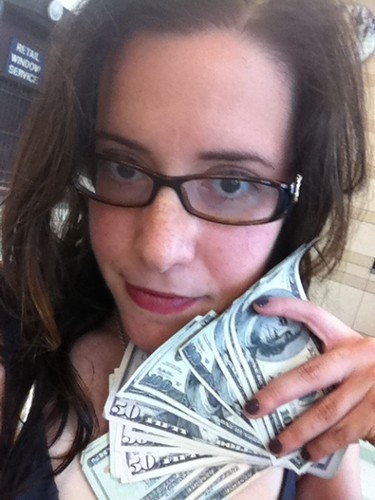
I'd love it if you'd check out my first essay for xoJane, Jane Pratt's site, "It Happened to Me: I Declared Bankruptcy," and if you like it, pass it on, like it on Facebook, etc. I'd really appreciate it. That's a self-portrait of me with my rent money on line at the post office buying a money order. Thank you!


Labels: , , , , , , , , ,

Sunday, April 03, 2011

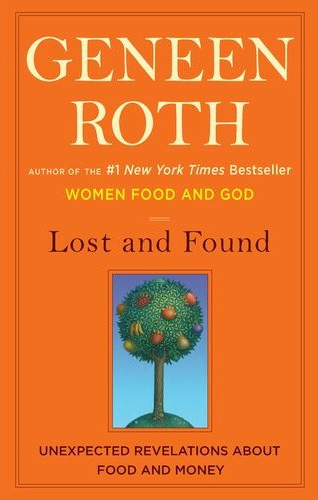
My official review of Lost and Found by Geneen Roth

My official review of Lost and Found: Unexpected Revelations About Food and Money by Geneen Roth, which I wrote a more personal take on here.


I'm a longtime Geneen Roth fan, and think this might be her best work yet, or at the very least, right up there, as she untangles the ways we think about money and food and what they represent. She starts with her own major loss--her and her husband's life savings of one million dollars, which had been invested with Bernie Madoff. But what's really at the heart of this book is why and how she came to invest with him and the assumptions she'd made about money--that caring about it was for "other people" (read: men) and that those who felt moved to act for social change "shouldn't" care about money.

I found so many connections to what she wrote about money and my own relationship...with dating and relationships. It was almost eerie, and I think anyone who's felt that they should look to an authority figure who "knows better," whether about money or another topic, who has purposefully avoided looking at the hard things, thinking they'd either go away or magically take care of themselves, who's used money to soothe themselves, will get something out of this book.

At first, especially if you're someone who lives paycheck to paycheck, the idea that someone with such a nest egg could feel worried about money seems a bit audacious, over-the-top, but it's a very clear line from those who are thin but feel fat, and what Roth does best here is describe that feeling, and how the extreme nature of what happened with her savings forced her to reckon with her previous thinking. The stories about her father's treatment of money (tossing it onto the floor and making everyone else literally scramble on the ground to pick it up) are eerie and disturbing, but Roth never asks us to feel sorry for her. She isn't looking at what made Madoff do what he did but rather how her own attitude fosters her ignorance and allowed her to continue to put money into a category outside of her own mind. This is a powerful book that I will certainly be rereading, and Roth masterfully looks deep inside as well as outside, amongst her peers who lost money to Madoff and their varying reactions as well as in a broader sense, to what money does and doesn't signify in our culture.

Labels: , , , , , , ,

Friday, August 07, 2009

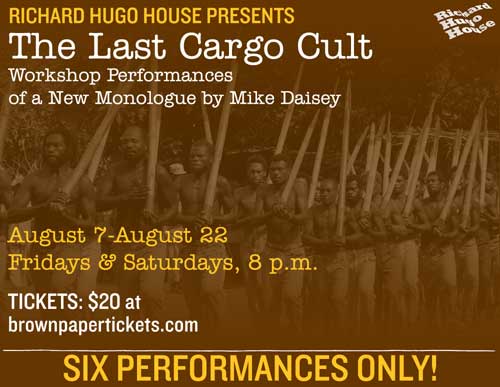
Seattle: Go see The Last Cargo Cult by Mike Daisey

Sadly, New York doesn't get this show until December! So long for something getting such great (and intriguing) reviews, that say things like:

As I promised, this isn't a review of The Last Cargo Cult. I won't tell you why I was handed $20 by the usher as I entered the theater, what happens on the little island of Tana, what the John Frum Movement worships or what exactly fiat currency means. These are all part of the amazing journey of Mike Daisey's The Last Cargo Cult, a monologue which is set to have an extraordinary life including three weekends of workshops in Seattle, a premiere at Philadelphia Live Arts Festival, a run at the Playmakers Repertory Theatre in Chapel Hill, and a prime-time spot in December at the Public Theater.

Buy tickets here.


Official blurb:

Nationally acclaimed monologuist and erstwhile Seattleite Mike Daisey returns to Seattle to workshop a new monologue, The Last Cargo Cult, where he tells the true-life story of his time on a remote South Pacific island whose inhabitants worship America at the base of a constantly erupting volcano. Their religion is explored alongside our own to form a sharp and searing examination of the international financial crisis. Daisey wrestles with the largest questions of what the collapse means, and what it says about our deepest values. Part adventure story and part memoir, he uses each culture to illuminate the other to find, between the seemingly primitive and the achingly modern, a human answer.

From The Seattle Times:

Ah, what some people will do for their art.

It wasn't enough for acclaimed monologuist Mike Daisey to suddenly drop everything, and make the 20-hour air journey to Tanna, a South Pacific island in the archipelago of Vanuatu.

No, for his new show "The Last Cargo Cult" (opening tonight at Richard Hugo House) he also boned up on macroeconomics.

"We went on vacation in Mexico, and I'd be lying on the beach reading this big stack of books on the subject," recalls Daisey, an ex-Seattleite and the prolific
auteur of such other one-man shows as the acclaimed "21 Dog Years: Doing Time@Amazon.com" and a "Great Men of Science" series.

So what does a remote isle have to do with Wall Street derivatives?

Trust Daisey, an intellectual omnivore, and his director-collaborator (and wife) Jean-Michele Gregory, to connect the dots.

Inspired by the world financial crisis, and the odd history of "cargo cults," the New York-based Daisey says he's really exploring the thorny relationship between human beings and money.


And:

Cargo cults, according to the Merriam-Webster Dictionary, are "Melanesian religious groups characterized by the belief that material wealth ... can be obtained through ritual worship."

See www.mikedaisey.com for more info.

Labels: , , , , , , , , ,