Email: rachelkramerbussel at gmail.com


Lusty Lady

BLOG OF RACHEL KRAMER BUSSEL
Watch my first and favorite book trailer for Spanked: Red-Cheeked Erotica. Get Spanked in print and ebook

Monday, August 22, 2016

Sex Out Loud podcast, erotica writing interview & my career essay at Lady Smut

Here are some links to what I've been up to as I get ready to head off to a week of vacation in New England.

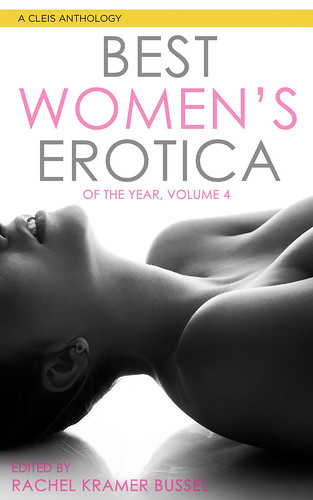
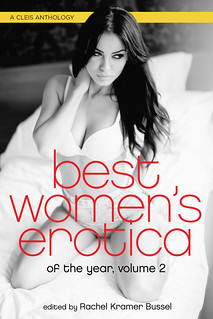
On Friday night, I appeared on Tristan Taormino's podcast Sex Out Loud, where she interviewed me about editing the Best Women's Erotica of the Year series, including why I want 500 submissions to Volume 3 (here's the call for submissions). Even more exciting for me was that we got to hear contributors Rose Caraway, Amy Butcher, Tara Betts and Lazuli Jones read from their sexy stories as well! Click the link above or the image below to listen (and please know it's not safe for work!).

sexoutloud

The wonderful erotica author Emmanuelle de Maupassant interviewed me all about my erotica writing and editing career. Here's a snippet of what I said:
I’m interested in exploring aspects of sexuality and attraction largely ignored by pop culture: specifically bisexuality, polyamory, promiscuity, men and women with larger bodies and body image, male submissives, fetishes, or affairs. I don’t sit down to intentionally humanize and eroticize fat people (and those who love and are attracted to fat people) or male submissives and so on; it’s a by-product of the types of characters I tend to write.
Lastly, over at Lady Smut, I wrote about how that career evolved from my law school days as part of second chance week, inspired by the brand new (out today!) very hot erotic romance Perfect by Elizabeth SaFleur, which you can learn more about on her site.

Perfect-cover_SaFleur_-640x1024

Labels: , , , , , , , ,

Wednesday, January 27, 2016

How I handle a bad writing day

I almost titled this post, "How to handle a bad writing day," but as with many things, I can't tell you how to do anything, I can only offer my experience and perhaps suggest ways you can handle a similar one. Yesterday started off well; I transcribed several interviews in order to file a piece. Then I sent some emails about an article I'm working on and did other tasks, but around three o'clock, I hit a wall. I felt frustrated, mostly with myself, like there was no way anything I wrote or any idea I had would be worth pursuing.

If it were nicer out, maybe I would have taken a walk, and perhaps I should have; I plan to today because I have the "excuse" of going to the post office. I did some administrative tasks while watching Crazy Ex-Girlfriend, but found I couldn't even get into the pole-dancing scenes. I just felt like my mind was a waste of space, and anything I started I abruptly stopped.

messydesk

Now, seeing the above photo, some people might say: it's your desk. It's the clutter. But not me. I'm a firm believer in the messy desk = more productivity theory.

So instead of trying to pound out words that were only going in circles, I pretty much gave up for the day. I decided to forget about the fact that my inquiries for that article turned up several people declining to be interviewed, to forget that I had still more transcription awaiting me, to try to put aside all the frustration I felt with my day. I admit I was a bit grouchy when my boyfriend got home, which he didn't deserve at all. We ate separate dinners, which we rarely do (mine was a bagel and hummus) and watched Jeopardy! and cuddled a bit. I took a bath and read a library book (the young adult novel Wonder, which I learned from Natalie Merchant's documentary Paradise is There is based on her song of the same name).

Setting your work aside is not a strategy that's always available. Often the work needs to be done and you have to find a way to plow through. My work tends to be less urgent most of the time, which is a blessing and a curse. When I need to, I can report and file a story from the airport (especially when it's one with free wifi like SFO), as I did last Tuesday. Sometimes I wish all my writing were like that because I would have to finish no matter what, but the reality is, usually I have a week or a few weeks for an article, a few months to turn in an anthology, a few days to edit a student's story, so a few hours here or there are not going to make or break a project. But sometimes, for me, I need to step away in order for my brain to recalibrate, for me to remember that all is not lost and that even though I may not be able to write through my own seething anger at myself, that will pass.

This morning I woke up and firstly, had gotten a full night's sleep, rather than waking up at four and thinking that was prime reading time, thus throwing off my day. I'd let myself sleep even though I had that same to do list haunting and taunting me and making me feel guilty for not working every second of the day. Then when I checked my email, I found that rather than the daunting declines I'd gotten the day before, I had messages from people eager to discuss my article topic. I made oatmeal and brainstormed new ideas. I made a relatively reasonable to do list. I noticed that the Amazon price keeps dropping on my new book and an older one is on sale, neither of which directly relate to my writing but are still pleasant things that will hopefully earn me a little extra money down the road.

Will today be a perfect writing day? Who knows? But I can say that I already feel more motivated than I did at the end of yesterday. Given that I'm going to be launching two websites soon to promote my work teaching both erotica and nonfiction sex writing, it feels a little dangerous and perhaps self-defeating to admit that I have bad writing days, to share that I get so stymied by my own demons I let them get in the way of my work. I am aiming to file roughly one article a day in order to meet my 2016 income goal, and I wish I could share a glowing report about how that's going. I will be posting some of the details of how I'm keeping track of my income and expenses this year, but probably after a few months, once I've fully sorted all the data. But the thing about emotions is that they don't track so well on spreadsheets. They sneak up on you and can derail you from a perfectly logical, straightforward path. Maybe it was hormones, maybe it was frustration, maybe I just needed a break yesterday for some unknown reason.

I'm posting this not because I think it makes me look together or professional, but precisely because it doesn't. I believe that baring my flaws is just as important as announcing my successes, because both are complementary parts of me. Sometimes I err on only focusing on one side (usually it's the flaws), and that's as imbalanced a portrait as only celebrating the successes.
br> Yes, I make a living through a mix of writing, editing and teaching, but I'm not perfect. I falter, sometimes more often, sometimes less. What I'm aiming to do this year is not so much falter less, as pick myself back up more quickly. The positive side of having various sources of income is that I actually welcome the work I do that isn't about my writing. Like many people, I can often be a better critic and editor of other people's work than my own, which is why I'm excited that I have a LitReactor class starting two weeks from tomorrow, and am open to new consulting clients. Helping other people polish and publish their work fuels me in different ways than spewing out my own words. It makes me feel helpful, useful, like I'm putting the things I've learned via trial and error over the last 16 or so years to good use. Not that I don't believe in my own writing, which I do (when I'm not having a day like yesterday), but the various tasks balance each other out. I don't think I could embrace being a full-time freelance writer if I didn't also have editing and teaching work.

At other times, some of the ways I've handled a bad writing day are: pick an article I read online and respond to it, write a listicle (they are harder than they look!), write a review of someone else's book, praise or repost someone's work I admire, clean my room (a never-ending task in my case). The best thing I can say about bad writing days is that for me, they make me all the more grateful for the good ones. And by "good," I don't necessarily mean that I filed a story or wrote something I was thrilled with, but where I was engaged by the work, where I approached it with my whole self, rather than doing so halfheartedly while secretly cheating on whatever I'm ostensibly writing by planning out the next thing I want to write in my head even as I type.

That is the state I strive for: to be fully in the moment, whether that's listening to an interviewee's words again as I type them up, digging deep into my emotional well for a personal essay, or penning a fictional sex scene. So while I'm usually not one for advice, the best thing I can say about a bad writing day is that at some point it will be over. A bad writing day is no big deal as long as you find a way to bounce back. That may not happen immediately, but I try not to let myself linger in that "nothing I write is worth it" mental state for too long, because the longer I do, the harder it is to shake that conviction. So if you too struggle with writing, I hope it's a short struggle, and that maybe through that struggle, you find something new to write about once you're on the other side of it.

Labels: , ,

Saturday, January 16, 2016

Why used bookstores aren't killing authors' careers

For the new year, I've wanted to try all sorts of new things: routines, behaviors, ways of thinking. The latter seems like it will be the most challenging to crack. I can't really blame myself for not sticking to routines when I spent the first week of the year packing to move and the second week moving and unpacking. But I'm trying. I now devote Fridays to bookkeeping, inputting everything I spent on my business the week prior. I've done my best to get out and jog/walk a few times a week (now to figure out the key card to my gym!).

One of the ways I want to change my bad thinking habits is to expect more good things, of the world and myself, and part of that means rather than lamenting and berating and obsessing over what I haven't done (but meant to), I celebrate the things I have, while also, of course, keeping myself accountable and on track to catch up with what needs to be done.

I'm on a plane right now to L.A., for my two writing workshops tomorrow. During my bus ride into New York, and again when I got on the plane, I made copious to do lists, basically rehashes of all the other to do lists I made earlier this week of articles I need to write, emails I need to send, various tasks I need to accomplish. I write them down to remind myself, but what often winds up happening is that I look at them and cringe and start to hate myself. So I'm working on better systems; I don't have the answer yet, though if I come up with anything useful, I'll share it.

Which brings me to this week's writing. I have a new piece hopefully going up next week for a site I haven't written for before, but one that did go up today that I was happy I got to write is about why used bookstores aren't taking money away from writers or at all akin to piracy, as was suggested by writer Kristen Lamb. I offered up my thoughts on used bookstores and quoted various writers I know, none of whom was dead set against used bookstores, and some were even very pro-used bookstores. Tiffany Reisz told me, "I’d no more apologize for buying a used book than I would for buying a used car."

salonwriters

Are my trying to form better thought patterns and my new article connected? Yes. My work world moves so fast that sometimes, even though I share most of my pieces on my various social media channels, I forget to take even a few seconds and savor the feeling of a new byline, a new piece that I worked hard on, whether it took an hour or twenty hours. I want to try to take that time more often, as a way of stepping back and also pushing myself forward. My old way clearly wasn't/isn't working, because all it does is leave me feeling overwhelmed and, often, hopeless, thinking my glass isn't just half empty, but dry as a well and never to be watered again, when the rational side of me knows that's not true.

So here's to spending a few days in the state where I used to live, writing new words, and savoring the ones that are harder to come by, but just as, if not more, meaningful than the ones that roll easily off my fingers.

Labels: , , , , , , , ,

Monday, October 05, 2015

3 things I learned from writing my now-defunct Philadelphia City Paper sex column, and how I'm applying them to my career

As I posted last week, Philadelphia City Paper will be shutting down with this week's issue. Last week's column was my final one. I won't bother posting tons of links to my favorite column since the online archives will very rapidly be disappearing. I also won't waste your time or mine lamenting this news, because I live by the Serenity Prayer. Since there's nothing I can do about the end of my column, I'm focused on other freelance writing and projects to make up for that lost income.

Here's the thing: I'm not a naturally glass half full kind of person, but I've had to be. Freelancing is the ultimate in at will employment, and I've had numerous gigs end, from my Village Voice Lusty Lady column to my stint editing Sex Diaries for New York magazine site Daily Intel. Just last month, I unexpectedly found myself with two short stories I'd expected to be published in an anthology, but weren't. I promptly published one on Lady Smut and submitted the other to Tamsin Flowers' Superotica Advent Calendar. For me, being pro-active simply feels much better than wallowing in bad news. It makes me believe the future is going to be infinitely better than the past, because I'm in charge of making it so.

So with that in mind, I want to share the three biggest lessons/takeaways I learned from writing 51 weekly columns for Philadelphia City Paper (there were a few weeks my column didn't run due to space issues).

1. Look far and wide for subjects

Yes, my column was published by a Philadelphia alt weekly, but I did my best to make it relevant to global readers. I learned when writing for the Voice that with the online edition, the column could be read by anyone, anywhere. I also didn't and don't live in Philadelphia, so I wasn't going to be able to cover too many local events, though I did take the time and spend the money to travel to Philly several times for local profiles. However, what's most fascinating to me is that almost everything I covered potentially could have wider interest. I wrote about a UK sex blogger's dick pics, which proved especially popular. Had nothing to do with Philadelphia per se, but it was about something many people were interested in, so it did well online.

I'd never written a weekly column before, and the pace often felt relentless. I wound up planning several weeks ahead just to get a grasp on things, which made it tough at the end to have already done research for upcoming columns and suddenly have no home for them. But that constant search for the new and novel forced me to broaden my horizons and seek out experts who I hadn't encountered before. I paid attention the world of sexuality in a way I hadn't been before writing the column, and I believe I'm more knowledgeable for that effort.

2. I want to have an impact on the world with my words

Going along with the potential global impact, I learned that I could break a story, and that I loved doing it. In January, my profile of my friend Crista Anne and her OrgasmQuest got picked up by numerous media outlets, including Jezebel, Refinery29, and many others, and led to Dr. Drew discussing it on his HLN show, including an appearance by Crista, prompted by the social media response to his posting about the topic. Seeing how fast and how far this topic spread, including to international press, made me realize I have good instincts. I obviously didn't know in advance the response the story would get, but this buoyed me when pitching other venues.

Last week, I broke another story about an acquaintance, based on what I'd seen her post on Facebook. My first article for Mic, "This Woman Is Fighting Fat-Shaming With These Awesome, Girl Scout-Inspired "Fatty" Badges," has now led to pieces at HelloGiggles, Cosmopolitan, Bustle, The Stir, APlus (Ashton Kutcher's website devoted to "positive journalism") and even People.com, and was even shared on Facebook by Planned Parenthood of Oregon. How could I not find that gratifying?

On both personal and professional levels, this feels good. It's not so much about outside validation, as knowing that my words resonate with others, and because of them, something I thought was powerful is becoming even more powerful.

3. I have to be the very best advocate for myself I can be

Finally, what may be the biggest lesson: I learned that I have to advocate for myself every step of the way. For instance, some of the early stories about OrgasmQuest didn't credit and/or link to my Philadelphia City Paper column. So I hopped right on email and asked for a link, and I believe every source I asked for did it. This weekend, I realized that I hadn't fully filled in my Mic profile. But my first thought was, "Why does that author get a photo and byline and Twitter link and I don't?" Then, Oh. I have to provide that information myself.. So I did, and it immediately appeared below my article. That happened when I published my hoarding essay with The Washington Post. The initial version didn't mention my Twitter handle; I'd read plenty of other contributors' pieces, so knew that was standard. I asked, and it immediately went up. It was a simple mistake, but one I doubt anyone else would notice.

That's why it's so important to know what you're entitled to, and stick up for yourself. I check anything that has my name on it, from articles to book cover copy (front and back), because my name is my reputation, which is what I use to help get me speaking and teaching gigs and new writing assignments. My sense is that a lot of people simply get grouchy or upset or vent when they seem something that seems unfair when it comes to their work, but I fully believe that what will get your farther than negativity is simply being tenacious about asking for what you deserve.

So am I upset that my column is over? Not really, because now my time is freed up to pursue bigger, more lucrative projects. I loved the column, but it's time has come and gone. I'm still writing my DAME sex column every other Wednesday, which I love doing, and will keep writing about sex, but also about books, babies, body image and whatever else catches my eye.

Labels: , , , , , , , ,

Monday, August 10, 2015

6 reasons I encourage my erotica writing students to submit their work

Updated November 29, 2015: All these reasons still apply, and I've now added a list of agents who represent erotica and erotic romance and details about what their looking for to my LitReactor curriculum. My next 4-week LitReactor online erotica writing class, Between the Sheets, runs February 11-March 10, 2016, and costs $350 if you register by December 31st, or $375 if you register January 1-February 10. Registration will remain open until the class sells out (maximum of 16 students) or until February 10th, whichever comes first. If you have questions about the class, please email rachelkramerbussel at gmail.com with "LitReactor" in the subject line. If you're interested in private consulting about your erotic writing or nonfiction sex writing, see my website (scroll down) for rates.

litreactorfeb11

Original post:

I'm gearing up for 3 classes I'm teaching sooner, online at LitReactor August 13-September 10th, and in person September 11th at CatalystCon in Burbank, California and the weekend of September 19-20 at SHE (Sexual Health Expo) in New York City (more about each at the end of the post). I've been thinking a lot about why I choose to conduct my classes the way I do, with a large emphasis, especially in the online classes, on submitting your work. I know this is not everyone's primary motivation for taking my classes, but to me it has multiple purposes, which I wanted to share here so you have a better sense of my philosophy about teaching and erotica. This is, of course, my highly subjective take on it, and my classes can't guarantee any students will be published, but I do heavily slant them in that direction for the reasons listed below, though you will also learn plenty whether you intend to submit your work or not.

1. Fulfillment and validation

I will never forget standing in a bookstore seeing my first erotica story, "Monica and Me," in print in an anthology for the first time. I had the double honor of having that one published in both Starf*cker edited by Shar Rednour and Best Lesbian Erotica 2001 by Tristan Taormino. I had tears in my eyes when I saw it, because it was such an honor. I'm not suggesting that publication is that only means to fulfillment, but that for me, and, I believe, for others, it's a sign of having achieved a goal you've worked toward, especially if you came into erotica reading sexy anthologies, as I did in college. That moment meant the world to me and inspired me to keep writing stories.

It was something I'd dreamt about and worked toward, and that made it all the more rewarding, to find my words tucked into pages next to authors I'd admired, as well as those new to me. I loved the idea that anyone sauntering into the store could pick it up and find my words. I believe the act of preparing a story for submission, of studying the guidelines, writing something to suit them, crafting something to suit a specific topic, and seeing those actions rewarded with a byline is a powerful, important experience. As you'll see in the LitReactor student testimonials, getting published based on the class's writing assignments was one of the things they appreciated about the class.

Having your work validated as worthy of publication can be an ego boost and a sign that you are heading in the direction you want to go. At the very least, it's a sign that somebody found value in your work, appreciated the effort that went into it and the outcome. Got you. Now, let me be clear: I am not at all saying this is the only way to achieve that or that you need anybody else to be a gatekeeper. I ardently support self-publishing, which is why in my LitReactor class I offer interviews with those who've self-published and share their resources so others can follow that path. But if publication is a goal for you, then meeting that goal can give you a wonderful sense of accomplishment, which can in turn push you to keep writing, creating and experimenting, especially in areas you may not have thought you could achieve success.

2. Money

I'm well aware that students pay money to take my classes, and I would love to see them make some of that money back and be compensated for their time. Most erotica short story markets do pay, and while you aren't going to get rich on the approximately $50 or $100 you will make per story, these can add up if you sell (and resell) multiple stories, plus you never know when one story may spark a novella or novel, or lead to something greater down the road. While these small sums may not seem like a lot now, imagine this: you sell 3 stories this year, 6 the next, 10 the next...then you go on to put together your own collection of short stories!

3. Building your writing career

Which brings me to...an erotica career. I certainly got into editing erotica via writing short stories, and I know numerous other anthologies editors and authors of longer works who have as well. If you take my LitReactor class, where I offer exclusive interviews with authors and publishers, you'll find out why one of them says that short stories are key to breaking into one market.

As I see it, they help in multiple ways. One: you get readers. Yes, you can also do this in other ways, such as blogging and posting your stories online and social media, but if you publish a short story in an anthology of multiple authors, you are going to be reaching both your natural built in audience of followers, and everyone else's, including the publisher. You're introducing yourself as an author, and who knows who might be reading? You then get to add that credit to your site and bio, and amplify your reach. The book may be reviewed in prominent publications that your posting on your own site may not reach. I've had agents contact me to ask for author's contact information after reading their short stories in my books (FYI, I never give out people's contact info, but I do pass on requests such as this).

I fully believe that if you have an eye toward building a career as an erotica writer, you have to find some way to reach as wide an audience as possible. You can't be in every location or publication at once, so getting your name out there, especially to readers you might not have connected with previously, is key. I've had people email me based on reading my stories in Zane's New York Times bestselling anthologies Succulent: Chocolate Flava II and Purple Panties, who found me via my bio in the books listing my website, who said they were reading my work for the first time and were impressed. These publication credits are part of your calling card, your introduction to both publishers and readers.

What I think is especially interesting about this one is that most people don't approach taking an introduction to erotic writing class thinking, I want to build a career of this (though some do, of course). But I didn't know this would be my career either. It was an escape from the tedium of law school for me, and look what happened. You really never know. I'm not claiming you will be the next bestselling author whose books are turned into movies or TV shows; I also can't guarantee you will get published. I don't necessarily mean "career" in terms of "making a living off erotic writing." What I'm talking about is building a byline, a brand, a platform to then go on and write as much or as little erotica as you'd like; along with practical writing craft information, I do my best to set students up with knowledge of how to go about making a name for themselves in the erotica marketplace to help cultivate readers, to help people find your work, to help yourself stand out. I see submitting your work as one step, often the first step, in doing this.

4. Confidence See #1. Selling my first short story gave me a mental rush, a boost, and crucial motivation to keep penning my stories. Yes, I still faced (and face) rejection, but I also got over that idea of don't even bother; nobody will want to read your work anyway, because I knew it wasn't true. I knew that my ideas were worthy, whether they were about a woman with a dishwashing fetish or a sexy bachelorette party or french fries. Especially because that story was based on a personal fantasy, I started to believe in my take on eroticism, rather than trying to follow what I thought I was "supposed" to do. I've even heard from students that their first rejection didn't deter them, because they knew what the process was like and were able to turn around that story and try to find a new home for it. After all, if you want to get published by someone else, eventually you will have to submit your work, and my philosophy is, why not start out strong and get your work circulating? It gets easier the more you do it.

5. Professionalism

Even if you don't intend to submit your work, the act of following the marketplace and seeing what publishers are looking for can give you important information that you can then use however you like. It doesn't mean that you have to follow what editors or publishers are looking for, or that you can't go rogue and use a call for submissions or writer's guidelines as a springboard for your own equally valid but very different idea that you publish elsewhere, but it gives you a sense of what is currently being requested and, presumably, what types of stories there's an audience for. This is valuable data for your own marketing purposes, and may have the bonus outcome of sparking your creativity; I know I've written plenty of pieces inspired by a given call for submissions that I wouldn't have had the ideas for otherwise.

Even if you ultimately keep your writing on your computer, I still believe in the power of preparing your work to submit it, because it forces you to go over ever last word, to make sure you are putting your best foot forward in the completed work. You can't cut corners when you know someone else is going to be evaluating it. You get something out of that process whether your work is accepted for publication or not, or whether you actually submit or not. It gets you to format and edit and revise and pay attention in a way that writing purely for yourself may not, and that will in turn serve you well if you later decide to submit your work or if you self-publish.

6. Community

Since I published that first story, then organized a reading for Best Lesbian Erotica 2001 at New York's Bluestockings Bookstore, and later went on to host In The Flesh Reading Series for five years in New York and organize numerous readings at events across the country (and once in London at Sh!), to including international authors in my Gotta Have It book trailer, community has always been an important part of my erotic writing, all the more so now that I teach it. One of the greatest aspects of both online and in person classes is the sense of camaraderie that's fostered, one that I also see reflected across numerous erotica group blogs and across social media, and in person at live erotic readings such as Esoterica in New Orleans and The Erotic Literary Salon in Philadelphia and Bedpost Confessions in Austin.

You do not have to leave your house to be part of the erotic writing community, though. You do not have to be published, either, but where this ties in is that if you have your work published on a website, in a magazine, in an anthology, etc., you are, I believe, joining forces with the others in the publication. You are linked to them, even if you never interact with them. I've discovered the work of numerous writers, ones I've read for pleasure and ones whose work I've pursued as an editor looking to publish new authors, by reading bios in anthologies. I've scoured mastheads and clicked through to read more of a given author's work. It's this sense of community that made me realize I want that sense of community fostered in my classes to continue, so I've set up a secret Facebook group where attendees can keep the discussion going and help boost each other's work and learn from one another.

Those are my reasons for encouraging students (and anyone, really) to submit their work. I also value those who are writing for private or personal purposes, but I've seen that those who start out with those intentions often wind up submitting their work just to see what will happen, and that often, it's fear or nervousness or assorted worries that keep them from doing so, rather than just opposition to it. For those people, I especially like to encourage them to see the value of their work and where it might fit in the market.

If you've made it this far and are interested in my approach to teaching erotica writing, here's a little more about each of my upcoming classes (any future ones will be announced on Twitter, Facebook and in my monthly newsletter, which you can sign up for on the left-hand side of rachelkramerbussel.com, and posted on my site's calendar page).

LitReactor.com, August 13-September 10
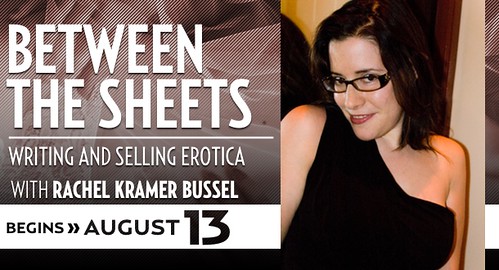
litreactorAugust13


Click above for the week by week breakdown of what's covered in my lectures and assignments. Great for those who want to dig deep into erotica writing, cultivate a community of fellow students and devote a full month to their work (I suggest having at least 5 hours a week available to devote to coursework, though that is optional, and you will retain access to the classroom materials forever once class is over, though you will get much more out of it by actively participating during the class). Take this class from anywhere in the world, participate on your schedule at any time, with the username of your choosing (meaning you can be completely anonymous). Maximum participants: 16. You get weekly lectures from me, weekly assignments, critiques by me and fellow students, extensive market information, based on my asking publishers what they are currently looking for, a dozen Q&As with authors (both self-published and traditionally published) such as Tiffany Reisz, Sommer Marsden, Elizabeth SaFleur and Feminista Jones, among others, as well as anthology editors and longtime erotica professionals such as author and Circlet Press founder Cecilia Tan. I do this so that students can get various perspectives on what editors and publishers want, and paths that authors have approached their work. I've taught 3 previous sold out classes of 16 people for LitReactor and have loved the collaborative environment the site fosters. People from around the world who are eager to learn help each other with constructive criticism, useful suggestions and creating the best work possible. And although the class officially ends September 10th, I will be around through the end of September to answer any final questions. You also get access to my secret Facebook group for class alumni. No prior writing experience necessary. Register here; registration ends August 12th or when class sells out. 3 spots are left as of this posting. $375.

CatalystCon, September 11, Burbank, California

catalystconwest2015banner


Here I teach an extended 3-hour workshop (along with one that same day on nonfiction sex writing, covering journalism and personal essays), where we do extended exercises, go over the marketplace for erotica, which includes a handout (which will also be emailed to participants) and discuss any questions and concerns authors may have. This has been a wonderful environment for my workshops because most attendees are coming in with a base of knowledge about sexuality that greatly fuels their writing, and often simply need encouragement and guidance about how to cultivate, complete and submit their work. No prior writing experience necessary. Register here. $45.

SHE (Sexual Health Expo), weekend of September 19-20, New York City (exact date/time TBA)

ComeSeeMe


This will be my first time teaching at SHE, a consumer expo that's previously held events in Los Angeles and Scottsdale. I'm especially looking forward to attending for the first time, and am pretty sure being surrounded by sex toys and assorted sexuality topics will help foster creativity. I will be teaching a 50-minute erotic writing workshop which will including writing exercises, an overview of the erotica writing marketplace, including a handout and a Q&A. You also get access to my secret Facebook group for class alumni. No prior writing experience necessary. Register for SHE here. $25 (for admission to SHE).

Labels: , , , , , , , , , , ,