















Email: rachelkramerbussel at gmail.com


Lusty Lady

BLOG OF RACHEL KRAMER BUSSEL
Watch my first and favorite book trailer for Spanked: Red-Cheeked Erotica. Get Spanked in print and ebook

Monday, October 17, 2011

Why You Should Care That Alexis Stewart Has Sex on the First Date, and is Proud of It

This is a post about sex on the first date...and it isn't. It is in the sense that it was inspired by the chapter "Should Sex Ever Involve Food?" in Whateverland: Learning to Live Here by Alexis Stewart and Jennifer Koppelman Hutt, which opens with sex on the first date, but the broader topic is about whether you should have sex to please yourself or whether you should have sex to please a host of other people and entities you want to impress: your partner, your friends, your parents, your religion, your employer, your society.

I'm pretty sure a hell of a lot of people privilege one of the latter over the former, because as someone who's tried my best to follow what I've felt was right, whether that involved my heart or my libido or my mind or actually none of those, I've senses, explicitly and implicitly, the questions of "But shouldn't you be worried about ___?" or, basically, you're doing it wrong. There is so much judgment and shaming around sex, and it doesn't take much to scratch the surface of our facade of live and let live. Don't use condoms (or any birth control)? Have sex on the first date? Like almost any kind of kinky sex, especially if you're a woman, especially if you're submissive? Like cross-dressing? Dare to question the gender binary? Wear inappropriate clothing? Are a sex worker, or in any way mix sex and money (cue my mom telling me she'd "support me if I needed help leaving the porn industry" - hi, hours of therapy). I could go on. There is also a tendency to be utterly narcissistic readers, to look at any first-person statements about sex, whether it's my "Uncut cocks don’t look sexual or arousing to me" (see Jewcy) or questioning whether facials (aka, someone coming on your face) are demeaning or posting a photo post-facial or an admission of not being utterly perfect with birth control and make it all about them. "But you should ____" Because I say so, is basically the "reasoning," and I find it sad that many people are on a mission to make sex so boring that it is exactly the same in every home.

The point is, I'm so glad that someone prominent is gutsy enough to simply own liking, preferring, having sex on the first date and that her friend and co-author, Jennifer Koppelman Hutt (who is married to a man) deliberately didn't have sex on the first date, but is not shaming Alexis Stewart in the book. Alexis Stewart writes, "To me, if you're not going to have sex on a first date, then I don't understand the point of the date. What better way is there to get to know someone than by having sex? If you don't have sex on the first date, it means you don't like the person enough to have sex And having sex on the first date doesn't mean the relationship won't last. Every single guy I've ever dated I've slept with (or the equivalent) on the first date." Then Jennifer Koppelman Hunt writes that she couldn't have sex on the first date (she's married now) "because I couldn't separate sex from love...If sex isn't a big deal for you, then have sex as often and as much as you want. But if you're someone who can't disconnect sex from emotional attachment, then you have to be careful, and maybe it's better to wait. Not because he's not going to want to be in a relationship with you now that he's slept with you, but because it's not something you can handle." She later writes about slut shaming and while this isn't about sex on the first date, I think it's an important message: "I didn't have sex with a lot of guys when I was dating because I didn't want to, and it took years before I had great sex and felt liberated and able to own my sexuality. You need that kind of experience before you get married, because if you've never experienced great sexual chemistry with someone, then how do you know?"

They are agreeing to have different approaches and not privileging one over the other. It's not the differing approaches I object to, it's the privileging, shaming, judging. It makes me cringe because not only is it so mightier-than-thou, it's not helpful if your true goal is to get people to change their ways (which I would hope your true goal isn't, but still). And while the examples I wrote about above are coming from the dominant culture's view of sexuality, I must add that it's not only the dominant culture that can assert its sexual hierarchies. I wrote in my column "The Non-Consensual Play Party Voyeur," about attending a play party where I felt pressured to engage in sexual activity, was simply handed a rope and became part of a BDSM scene that I in no way whatsoever wanted any part of (and wasn't even told exactly what was happening, thereby creating an unsafe environment for the woman whose leg the rope was attached to), "Despite the supposedly laissez-faire, anything-goes, no-pressure attitude, there are people who do think you’re fair game if you even set foot in such an event."

I'm not saying I'm immune to it either. There have been times in my life when I abstained from first date sex on purpose because I had enjoyed it and thought I was building something with someone only to have them never talk to me again. As I headed into 2006 I wrote the Village Voice column "New Year's Sexolutions" and wrote:

4. Save sex for date two, or later. Much as the outspoken, sex-positive, feminist side of me wants to say that girls can be just as voracious as guys, I've noticed that hopping into bed on the first date hasn't brought success for me. It's not inevitable, but especially when drinking's involved, it seems to jump-start the nascent relationship too early. The sex may still be awesome, but it's the next few days of "Should I contact him? What does he mean by 'busy'?" post-hookup confusion that makes first-date sex more trouble than it's worth. There's a line in the band Sarge's song "Clearer" that goes, "Now I mark each new morning by whose bed I climbed out of last," and every time I hear it, I remember what that was like, when I got off more on the fact of bedding new partners than on what I actually did with them. I'd rather go for quality over quantity; hopefully, waiting, even just one night, will be worth it.

But I think there's a difference between making your own informed choice and only doing something because it's what's expected. My reasons have differed over the years, and trying to parse that line of your own choice vs. what others expect is challenging, but worth it. Which brings me to a book that will help you examine those forces and make those choices...

In her excellent new book What You Really Really Want: The Smart Girl's Shame-Free Guide to Sex and Safety, which I highly recommend, Jaclyn Friedman encourages readers to write a mission statement and talks about the "Terrible Trio" of "shame, blame, and fear" and how we often react to them by pulling away from our own desires and kowtowing to what others want and expect of us. She writes:

It's important to know that we all want "wrong" things at one point or another. Our cultusre's standard of what's acceptable sexual behavior for women is so narrow it's impossible to live up to. So if you find yourself fearing your own desires because you think they're "wrong," the best thing to do is take the time to figure out which kind of "wrong" they are. Specifically, you want to ask yourself: If I acted on this desire, would anyone get hurt? If so, who and why?

That is an intelligent, sensible, self-centered (not in the obnoxious way, in the taking-care-of-yourself way) approach to the topic, and any time you have someone dictating from on high how long you should wait before having sex or how many partners is too few or too many or what kinds of sex acts are right or wrong, you have a problem. In the wake of What's Your Number? there's been both criticism of the concept as well as these "whatever number you have is okay" type pieces, and yet there is still an idea that, especially for women, you can have a number that's too high, that means there's something wrong with you.

So the point is not what you personally think about sex on a first date, facials, play parties, etc., but whether you assume everyone should act the way you do. It doesn't mean you have to want to date or sleep with or even be friends with someone who does something you're not into, but that you don't assume that your opinion is better than someone else's opinion. It's not.

Labels: , , , , , , , ,

Friday, December 24, 2010

Shouldn't consent be at the center of rape laws?

There are tons of sites better suited to in-depth coverage of the Assange case, so I'm not going to talk about that case per se in this post, but I was re-reading the infamous AOL News "sex by surprise" piece that Jessica Valenti so brilliantly wrote a takedown of (sadly, not after it basically became the go-to article on the topic) and saw this, bolding mine:

But others say Assange, who denies any wrongdoing and says the sex was consensual, may have just run afoul of Sweden's unusual rape laws, which are considered pro-feminist because of the consideration given issues of consent when it comes to sexual activity -- including even the issue of whether a condom was used.

Now, I have not personally read the Swedish laws, but just the phrasing there should give us pause. Isn't consent at the heart of the issue of rape? Or shouldn't it be?

Even though I don't agree with Naomi Wolf (because being pithy, snarky and overly brief about a major topic works so well; do also see Yes Means Yes editor Jaclyn Friedman talking with her on Democracy Now) or former sex crimes prosecutor Wendy Murphy, who I quote from The Daily Beast below, that this case somehow hurts other cases simply by the timing and fame of it, I think this is a sad but interesting commentary:

In another context, I'd argue vigorously for wider understanding of the multitude of ways that the American justice system routinely fails to protect women's personal autonomy and bodily integrity by enacting inadequate laws, and failing to enforce the ones we have. For example, in almost every state in this country, rape requires proof not only of nonconsent but also "force." If you take my stuff without my consent, it's called larceny. If you also use force, it's called robbery. But if you take my bodily integrity without my consent, it's not a crime at all, unless you also use force. Non-consent should be enough.

I do think we're seeing a lot of great stories that point out the complexities of the issue of "how a rape victim should act," meaning, there is no "one right way." Amanda Marcotte at Slate wrote a great piece, The Perils of Charging Rape.

There's a 1994 book I read that I still think is extremely powerful, I Never Called It Rape: The Ms. Report on Recognizing, Fighting, and Surviving Date and Acquaintance Rape by Robin Warshaw. This recommendation is not about the law per se but about some of the ways we talk about rape and sexual assault and the reality of the ways women talk and feel about their experiences; as the title shows, they do not all speak of it using the word "rape" or the same language at all.

I also just read a blog post by Teri Buhl stating that in London there is a belief that one of the accusers "is a honey fly, positioned to sit front row and braless during his college talk in Sweeden and entrap him in a sexually devious event." I have no idea what actually happened between Assange and these women but find the idea that a woman is even being discussed in this way offensive, but even more, what is a "sexually devious event" and what does that even mean? And, playing devil's advocate, this were remotely true, wouldn't you think Assange would have, I don't know, stayed away? I think that idea is as insulting to men as it is to women; that women don't think/act for themselves as well as that men think only with their dicks. Again, I'm leaving the Assange coverage to others but this has certainly brought the topic of what rape looks like in real people's lives (aside from the two accusers) and what our assumptions about what those who bring rape charges should look and act and sound like to the fore.

Though after Michael Moore's recent appearance on The Rachel Maddow Show, the #mooreandme hashtag on Twitter, at least as it relates to Michael Moore, is basically over (though still generating fascinating discussions), I wanted to share this post, "An Open Letter to Michael Moore", from The SAFER Blog, that I found extremely moving.

Labels: , , , , , , , ,

Thursday, August 05, 2010

The BlogHer panel I'd totally attend if I weren't going to Martha's Vineyard: "Bringing Sex Out of the Closet"

I'm gonna try to start posting here more often...emphasis on "try" as I'm behind on multiple books and have lots of, well, life going on.

Like this weekend, I'll be taking the SeaStreak boat for the first time to spend 36 hours with my family on Martha's Vineyard and attend my aunt's memorial service. And maybe swim and eat cupcakes and chill with the fam. So I will sadly not be able to attend any of the official BlogHer conference. I'm especially bummed to miss this panel tomorrow:

Bringing Sex Out of the Closet
August 6, 2:45-4 pm
Sponsored by EdenFantasys

Did you take sex ed in high school? Did your parents give you "the talk" when you were a kid? You're an adult now, and it's time to take matters into your own hands. (Sometimes literally!) Being a better businesswoman, partner and mother is easier when you have an emotionally healthy sex life. This session discusses how to engage the Internet to its fullest potential to meet your sexual needs. Join moderator Twanna Hines, who blogs at FunkyBrownChick.com;  AV Flox, who writes at Sex and the 405; Genia Stevens, who produces Sister Talk RadioMominatrix sex advice columnist, Kristen Chase; and BDSM blogger Tess Danesi, who blogs at Urban Gypsy, for a rousing and frank discussion about sex for smart women who want to improve their lives. Takeaways include but are not limited to:


How can I safely and/or anonymously experiment with my sexual identity online?
Where are the best Web resources for sexual health information?
Can the Internet save my relationship?

Read more about the panelists here.

Speaking of bringing sex out of the closet, be sure to read Yes Means Yes co-editor Jaclyn Friedman's very brave, honest post "My Sluthood, Myself at Jezebel.

Labels: , , , , , , , , ,

Thursday, February 12, 2009

My name in Publishers Weekly, and Mistress Matisse is not a feminist

This is kindof a "I never thought it would happen to me..." story because Publishers Weekly has never reviewed any of my books. I had thought with Dirty Girls, my first book with pre-publication galleys, they would, but they didn't. Guess if that's what I want I've gotta stop with the erotica. Am I bitter? Okay, a little. I hate that erotica, and books by small presses, are so marginalized.

I wish mine sold better, and I wish certain megachain bookstores had erotica sections. I wish a lot of things but can't change them in any way, except as to making decisions about what type of stuff I publish. For now, all I know how to do is erotica, but I do want to branch out, while keeping editing books (and keeping learning how to properly promote and market them). I feel like with every book, it's a huge opportunity to learn how to do it right, do it better, learn what money is well-spent, and what isn't. So I'm in the process of figuring all that out, and seeing where it takes me.

Anyway, Yes Means Yes has not only sold out of its first printing (10,000 copies!!!!) in like 2 months, but just got a starred review in PW. Congratulations Jessica and Jaclyn. There's at least one piece in there on my shortlist for Best Sex Writing 2010. It's really a coup for these editors, but I was happy to see my piece get a mention.


Here's the review (via Jaclyn Friedman's email):

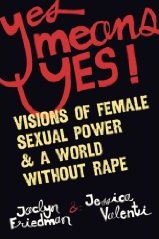
Yes Means Yes! : Visions of Female Sexual Power & A World Without Rape
Jaclyn Friedman and Jessica Valenti. Seal, $15.95 (256p) ISBN 9781580052573
Activists and writers Friedman and Valenti (
He's a Stud, She's a Slut) deliver an extraordinary essay compilation focusing on the struggle to stop rape in the U.S. and the importance of sexual identity and ownership. Early on, Thomas MacAulay Millar and Rachel Kramer Bussel explain how the "no means no" concept (sexual consent equals the absence of no) must be rejected in favor of a "yes means yes" mentality: the idea that consent means affirmative participation in the act itself, a broader definition that better protects women while encouraging power over—not fear of—personal sexual identity. Other topics include body image and self-esteem issues as well as incest, the dangers faced by female immigrants and the public perception of rape; in "Trial by Media," Samhita Mukhopadhyay looks at the Duke Lacrosse rape case and finds the media acting in the tradition of slavery by commodifying the young, female African-American body. Though surprisingly entertaining throughout, with no shortage of wit or humor, unexpected topics (Friedman on enjoying sex, transsexual writer Julia Serano on the mixed cultural messages that lead "nice guys" to sexual aggression) keep the book dynamic. Sure to empower and inform, this is an important and inspiring read for assault survivors, educators, activists, experts and those on a path to self discovery. (Starred)

I was intrigued by Mistress Morgana's post about her not being a feminist, and thankful for it. It reminded me to live up to what I believe in, which is to be as broad-minded as possible. I hate the idea of only writing "to" or "for" others who identify as feminist, and I think it's obnoxious, condescending and disturbing to assume that other people, especially women, somehow, in some essentialist way "are" feminists just because they...[insert supposedly feminist action or belief]

I quoted Mistress Matisse because her column said what I was trying to say, but so much more eloquently. Here's part of her post:


People ask me, "Are you a feminist?" And I usually say something like, "Do you think I am?"

Sometimes they say, "Oh yes, definitely!"

And I smile and say "All right then, I am."

Sometimes they say "No! Women like you are antithetical to feminism."

And I shrug and say, "Then we don't have anything else to talk about, do we?"


It's a way of identifying and can't be placed onto someone. Also, um, news flash: feminists and non-feminists can, and often do, agree on lots of things. A super simplistic way of saying it from my addled almost-flu-ed out mind, but I wanted to say it. I would never want to be thought of as foisting my views on anyone else and honestly don't really care whether any given person identifies as a feminist. I think sometimes so much wasted time and effort is spent trying to get people to simply say the word, rather than focusing on what we do agree on. I need to reread my copy of Paula Kamen's excellent book Feminist Fatale for more on that.

Labels: , , , , , , , ,

Sunday, January 11, 2009

Yes Means Yes reading on Wednesday

The most important (to me) reading I'm doing this week, is, of course, the one with the free cupcakes on Thursday from 8-10 (though cupcakes tend to go fast we will have plenty of other snacks, plus a great lineup) at In The Flesh Reading Series but I'm also doing a reading on Wednesday, January 14th for the new Seal Press anthology Yes Means Yes: Visions of Female Sexual Power and an End to Rape, edited by Jaclyn Friedman and Jessica Valenti.

Left Bank Books book buyer Sarah apparently loved it, I took this the other night:


I haven't read it all yet so can't fully speak to the content, and to be honest probably can't separate my extremely rough time writing my essay about consent from the book. Suffice it to say, it was harrowing so I'm just glad that the powers that be accepted it. I'm proud of myself for finishing it. There are some amazing authors in the book who make it well worth checking out - Toni Amato, Javacia Harris, Samhita Mukhopadhyay. There is also a reading I'm not part of on Monday at Bluestockings at 7 p.m., and there's also, of course, a blog for the book for more information.

And author Stacey May Fowles had an excerpt from her essay, "The Fantasy of Acceptable 'Non-Consent': Why the Female Sexual Submissive Scares Us (and Why She Shouldn't)" published on Alternet a few weeks ago, which I thought was excellent:

Feminist pornographic depictions of women being dominated for pleasure are often those involving other women -- that's a safe explicit image, because the idea of a male inflicting pain on a consenting woman is just too hard for many people to stomach. For many viewers it hits too close to home -- the idea of a female submissive's consensual exchange of her authority to make decisions (temporarily or long-term) for a dominant's agreement to make decisions for her just doesn't sit well with the feminist community.

It's important to point out that, however you attempt to excuse it, this inability to accept BDSM into the feminist dialogue is really just a form of kinkophobia, a widely accepted prejudice against the practice of power-exchange sex. Patrick Califia, writer and advocate of BDSM pornography and practice, wisely states that "internalized kinkophobia is the unique sense of shame that many, if not most, sadomasochists feel about their participation in a deviant society." This hatred of self can be particularly strong among feminist submissives, when an entire community that they identify with either dismisses their desires or pegs them as unwitting victims.


And by the way, yes, I am indeed working on being more confident. This is not a confidence issue, it's just that when the process of creating writing is so trying for various reasons (I just remember crying at The Chambers Hotel and not being able to stop), in my head, the outcome really doesn't matter. The difficulty rested with me, and writing this piece was different from other pieces where I'd come up with an idea from scratch, but I wanted to rise to the challenge after flaking on some excellent anthologies and promising myself never to do that again.

But I'm not gonna lie about how awesome my essay is, cause I don't think it is. It's done, is how I see it in my head. I worked under the constraints I had, and somehow eked it out, which is much much much more than I can say for my general writing of late. To me, that is the achievement on a personal level, that is what matters, that it got done. I'm learning that sometimes it's really not about how good or bad a piece of writing is, but whether you can get it done, because once it's done, it can be finagled and edited and tweaked. If it's never done, well...welcome to my world/life.

I tend not to reread my published work, perhaps a poor decision, and obviously at live readings I have to, but I'm always going to be infinitely more interested in the next thing I write than the thing I already have.

All that being said, please come to KGB and Happy Ending this week! At the very least, on Thursday I will feed you.

Labels: , , , , , ,