Email: rachelkramerbussel at gmail.com


Lusty Lady

BLOG OF RACHEL KRAMER BUSSEL
Watch my first and favorite book trailer for Spanked: Red-Cheeked Erotica. Get Spanked in print and ebook

Sunday, October 04, 2015

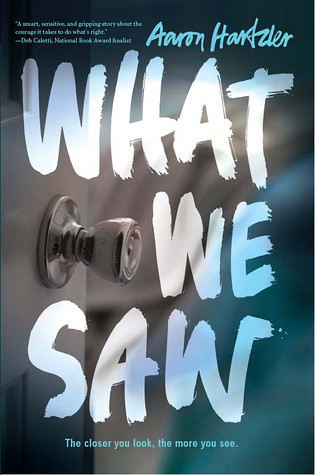
How the Steubenville rape case inspired new young adult novel What We Saw

Aaron Hartzler's new young adult novel What We Saw, published by HarperTeen, was directly inspired by the Steubenville rape case, and features a similar story line about teens, adults and media in a sports-minded small town questioning whether a sexual assault occurred at a party where teens were drinking and documenting their partying on social media. Check out my interview with Hartzler at Salon, and read the book - it's excellent!

whatwesawcover

Labels: , , , , , , , , , , ,

Wednesday, March 11, 2015

My Q&A with Ashley Manta on her blog post on naming her rapist

For my Shameless Sex column at DAME, I interviewed sex educator Ashley Manta about her blog post entitled, "Naming My Rapist After 15 Years." She posted it on Sunday and agreed to speak with me on pretty short notice for it. I'm grateful she was willing to share her story and have been observing the reactions and impact it's already had in a few short days. Please check out both the interview and her original post.

ashleydamescreenshot

Labels: , , , , , ,

Friday, December 24, 2010

Shouldn't consent be at the center of rape laws?

There are tons of sites better suited to in-depth coverage of the Assange case, so I'm not going to talk about that case per se in this post, but I was re-reading the infamous AOL News "sex by surprise" piece that Jessica Valenti so brilliantly wrote a takedown of (sadly, not after it basically became the go-to article on the topic) and saw this, bolding mine:

But others say Assange, who denies any wrongdoing and says the sex was consensual, may have just run afoul of Sweden's unusual rape laws, which are considered pro-feminist because of the consideration given issues of consent when it comes to sexual activity -- including even the issue of whether a condom was used.

Now, I have not personally read the Swedish laws, but just the phrasing there should give us pause. Isn't consent at the heart of the issue of rape? Or shouldn't it be?

Even though I don't agree with Naomi Wolf (because being pithy, snarky and overly brief about a major topic works so well; do also see Yes Means Yes editor Jaclyn Friedman talking with her on Democracy Now) or former sex crimes prosecutor Wendy Murphy, who I quote from The Daily Beast below, that this case somehow hurts other cases simply by the timing and fame of it, I think this is a sad but interesting commentary:

In another context, I'd argue vigorously for wider understanding of the multitude of ways that the American justice system routinely fails to protect women's personal autonomy and bodily integrity by enacting inadequate laws, and failing to enforce the ones we have. For example, in almost every state in this country, rape requires proof not only of nonconsent but also "force." If you take my stuff without my consent, it's called larceny. If you also use force, it's called robbery. But if you take my bodily integrity without my consent, it's not a crime at all, unless you also use force. Non-consent should be enough.

I do think we're seeing a lot of great stories that point out the complexities of the issue of "how a rape victim should act," meaning, there is no "one right way." Amanda Marcotte at Slate wrote a great piece, The Perils of Charging Rape.

There's a 1994 book I read that I still think is extremely powerful, I Never Called It Rape: The Ms. Report on Recognizing, Fighting, and Surviving Date and Acquaintance Rape by Robin Warshaw. This recommendation is not about the law per se but about some of the ways we talk about rape and sexual assault and the reality of the ways women talk and feel about their experiences; as the title shows, they do not all speak of it using the word "rape" or the same language at all.

I also just read a blog post by Teri Buhl stating that in London there is a belief that one of the accusers "is a honey fly, positioned to sit front row and braless during his college talk in Sweeden and entrap him in a sexually devious event." I have no idea what actually happened between Assange and these women but find the idea that a woman is even being discussed in this way offensive, but even more, what is a "sexually devious event" and what does that even mean? And, playing devil's advocate, this were remotely true, wouldn't you think Assange would have, I don't know, stayed away? I think that idea is as insulting to men as it is to women; that women don't think/act for themselves as well as that men think only with their dicks. Again, I'm leaving the Assange coverage to others but this has certainly brought the topic of what rape looks like in real people's lives (aside from the two accusers) and what our assumptions about what those who bring rape charges should look and act and sound like to the fore.

Though after Michael Moore's recent appearance on The Rachel Maddow Show, the #mooreandme hashtag on Twitter, at least as it relates to Michael Moore, is basically over (though still generating fascinating discussions), I wanted to share this post, "An Open Letter to Michael Moore", from The SAFER Blog, that I found extremely moving.

Labels: , , , , , , , ,

Sunday, January 11, 2009

Yes Means Yes reading on Wednesday

The most important (to me) reading I'm doing this week, is, of course, the one with the free cupcakes on Thursday from 8-10 (though cupcakes tend to go fast we will have plenty of other snacks, plus a great lineup) at In The Flesh Reading Series but I'm also doing a reading on Wednesday, January 14th for the new Seal Press anthology Yes Means Yes: Visions of Female Sexual Power and an End to Rape, edited by Jaclyn Friedman and Jessica Valenti.

Left Bank Books book buyer Sarah apparently loved it, I took this the other night:


I haven't read it all yet so can't fully speak to the content, and to be honest probably can't separate my extremely rough time writing my essay about consent from the book. Suffice it to say, it was harrowing so I'm just glad that the powers that be accepted it. I'm proud of myself for finishing it. There are some amazing authors in the book who make it well worth checking out - Toni Amato, Javacia Harris, Samhita Mukhopadhyay. There is also a reading I'm not part of on Monday at Bluestockings at 7 p.m., and there's also, of course, a blog for the book for more information.

And author Stacey May Fowles had an excerpt from her essay, "The Fantasy of Acceptable 'Non-Consent': Why the Female Sexual Submissive Scares Us (and Why She Shouldn't)" published on Alternet a few weeks ago, which I thought was excellent:

Feminist pornographic depictions of women being dominated for pleasure are often those involving other women -- that's a safe explicit image, because the idea of a male inflicting pain on a consenting woman is just too hard for many people to stomach. For many viewers it hits too close to home -- the idea of a female submissive's consensual exchange of her authority to make decisions (temporarily or long-term) for a dominant's agreement to make decisions for her just doesn't sit well with the feminist community.

It's important to point out that, however you attempt to excuse it, this inability to accept BDSM into the feminist dialogue is really just a form of kinkophobia, a widely accepted prejudice against the practice of power-exchange sex. Patrick Califia, writer and advocate of BDSM pornography and practice, wisely states that "internalized kinkophobia is the unique sense of shame that many, if not most, sadomasochists feel about their participation in a deviant society." This hatred of self can be particularly strong among feminist submissives, when an entire community that they identify with either dismisses their desires or pegs them as unwitting victims.


And by the way, yes, I am indeed working on being more confident. This is not a confidence issue, it's just that when the process of creating writing is so trying for various reasons (I just remember crying at The Chambers Hotel and not being able to stop), in my head, the outcome really doesn't matter. The difficulty rested with me, and writing this piece was different from other pieces where I'd come up with an idea from scratch, but I wanted to rise to the challenge after flaking on some excellent anthologies and promising myself never to do that again.

But I'm not gonna lie about how awesome my essay is, cause I don't think it is. It's done, is how I see it in my head. I worked under the constraints I had, and somehow eked it out, which is much much much more than I can say for my general writing of late. To me, that is the achievement on a personal level, that is what matters, that it got done. I'm learning that sometimes it's really not about how good or bad a piece of writing is, but whether you can get it done, because once it's done, it can be finagled and edited and tweaked. If it's never done, well...welcome to my world/life.

I tend not to reread my published work, perhaps a poor decision, and obviously at live readings I have to, but I'm always going to be infinitely more interested in the next thing I write than the thing I already have.

All that being said, please come to KGB and Happy Ending this week! At the very least, on Thursday I will feed you.

Labels: , , , , , ,